Interview with an Injection Mould Toolmaker // Alliance Tooling Blog
 PlastikMedia Guest
- 4 minutes read

|
Getting your Trinity Audio player ready...
|
Alliance Tooling explores what determines the working life of an injection mould, from the choice of tool steel and materials to cooling, maintenance and early design decisions.
How Long Should a Mould Last?
“The honest answer is: as long as you specify it to. People talk about tool life like it’s luck, but most of it is decided before we cut any steel. If you tell us you need fifty thousand parts for a short product run, we’ll build you something very different to a tool that’s going to run three shifts for the next ten years. The mistake is building the first one and expecting the second.”
So what should a customer tell you up front?
“Annual volumes, how long the product is expected to stay in production, the material, and the cosmetic and dimensional requirements. Material matters more than people think. A glass-filled nylon is abrasive, it’ll wear gates and shut-offs far faster than a polypropylene. Some materials, like PVC or flame-retardant grades, give off corrosive gases, so you’re into stainless steels. If we know that early, we design for it. If we find out after, you’re into repairs.”
Steel Choice: Where the Money Goes
Is harder steel always better?
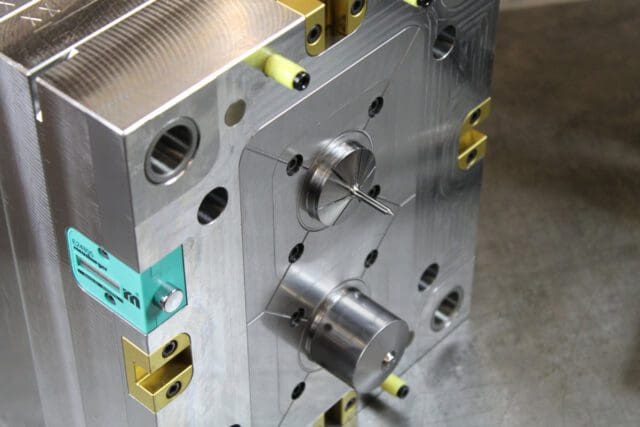
“Not always. Pre-hardened steels are quicker to machine and easier to modify, which is why they’re popular for lower-volume work and tools that might change. Through-hardened steels hold an edge and resist wear much better over high volumes, but they cost more to make and they’re less forgiving when you want to alter something later. It’s a trade-off between up-front cost, flexibility and longevity, and the right answer depends on the job.”
“Where we can, we put the hard-wearing material where the wear happens: gate inserts, core pins, shut-off faces. Make those replaceable and you can refresh the parts that wear without touching the rest of the tool.”
The Things That Quietly Shorten Tool Life
What kills moulds early?
“Poor cooling is a big one. If a tool runs hot or unevenly, you get longer cycle times, stress in the steel and parts that won’t hold their dimensions. Good cooling design pays you back on every single shot.”
“Venting is another. If gas can’t escape, it burns at the end of fill, and over time that eats into the steel and leaves you with flash and marks. Then there’s simple mechanical stuff: ejector pins, slides and lifters running without proper lubrication, or a tool being clamped and run outside the settings it was built for.”
“And honestly, storage. A tool that comes off the press wet, gets put on a rack without being cleaned and protected, and then sits in a cold unit for six months will come back with rust on the cavity. That’s an avoidable repair.”
Maintenance: Cheap Now, or Expensive Later
What does good maintenance look like?
“Planned, not reactive. Count the cycles, and service the tool at intervals based on how hard it’s working, rather than waiting for it to start making bad parts. That means cleaning vents, checking wear on gates and shut-offs, lubricating moving components, and checking water channels for scale. Write down what you find each time. That history tells you where the tool is wearing and lets you plan replacement inserts before they fail.”
“The tools that last are almost never the most expensive ones. They’re the ones somebody looks after.”
Designing for a Long Life
If you’re starting a new project, what’s the one thing to get right?
“Talk to the toolmaker early, ideally while the part is still being designed. Small changes, like adding draft, evening out wall thickness or moving a gate, can make the difference between a tool that runs cleanly for years and one that fights you every day. It’s much cheaper to change a CAD model than a hardened cavity.”
The Takeaway
Tool life isn’t a fixed number on a quote. It’s the result of decisions about volume, material, steel, cooling and design, followed by a sensible maintenance routine once the tool is in production. Get those right, and the cost per part keeps falling for as long as the product sells.
Planning a new tool, or getting more life out of an existing one? Talk to the Alliance Tooling team about your project.
Read more news from Alliance Tooling here.

Alliance Tooling
+44(0)116 275 0584
Website
Email