From Filament to Podium: LATI3Dlab on Board PB526
 Will Clarke
- 4 minutes read

|
Getting your Trinity Audio player ready...
|
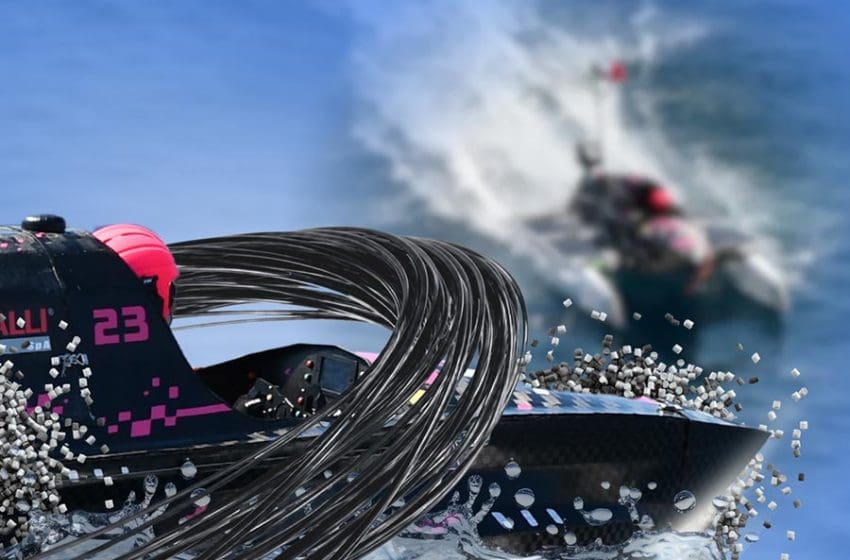
Collaboration between LATI3Dlab and Physis PEB continues, showcasing the growing role of 3D printing with engineering materials to create functional components. PB526 earned the Innovation Prize at the Monaco Energy Boat Challenge 2026 and finished third in the Energy Class.
3D printing with engineering materials is playing an increasingly concrete role in electric boating. Compounds developed by LATI3Dlab contributed to the production of several functional components for PB526, the new catamaran prototype built by the Physis PEB – Polimi Energy Boat student team for the Monaco Energy Boat Challenge 2026.
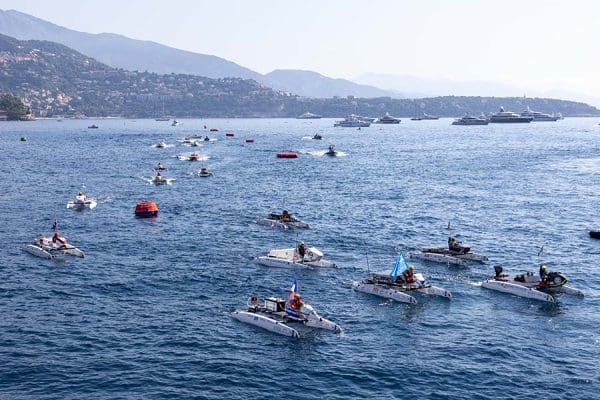
The competition, which concluded on 11 July at the Yacht Club de Monaco, saw Physis PEB compete against 21 teams from more than ten countries. PB526 won the Innovation Prize and
secured third place in the Energy Class, improving by three positions compared with the team’s 2025 result and returning to the podium after four years.
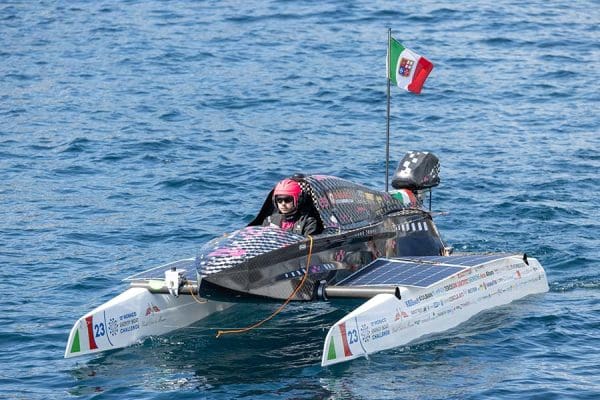
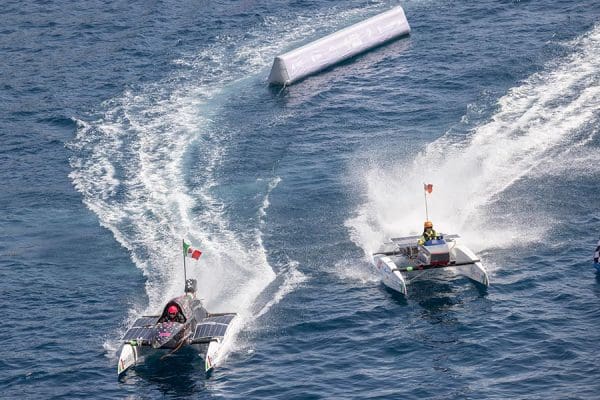
The catamaran also achieved second place in the Endurance Race, Speed Race and Slalom Race, as well as fourth place in the Championship Race despite a technical issue.
The Innovation Prize is awarded by the international jury to the project that stands out for the originality of its solutions, their potential impact and their practical applicability to the future of
sustainable navigation.
PB526 combines electric mobility, structural design, solar energy management and additive manufacturing. For the first time in the history of the Energy Class, the team developed a self-
supporting monocoque structure almost five metres long. The propulsion tower was also completely redesigned to integrate the electric motor, inverter, part of the onboard electronics and
the related cooling system.
The collaboration between LATI3Dlab and Physis PEB began during the previous edition of the competition. For the 2026 season, LATI3Dlab renewed its support by providing a broader range of
additive manufacturing compounds, selected according to the mechanical, elastic, dimensional and safety requirements of each application.
The materials used include LASTANE 50 AM M/10 and LASTANE 50 AM K/20, TPU compounds reinforced respectively with glass fibre and carbon fibre; LATIBLEND 7587 AM K/10, a PC/PBT compound reinforced with 10% carbon fibre; and LATER G AM UVH/V0HF, a V0 flame-retardant PETG compound with a halogen-free flame-retardant system.
The LASTANE compounds were used for clamps, damping washers and auxiliary battery supports. Their elastomeric matrix provides controlled deformation, resilience and the ability to absorb impacts and vibrations, while the fibre reinforcement contributes to the stability and mechanical response of the printed component.
LATIBLEND 7587 AM K/10 was selected for parts requiring greater stiffness, mechanical strength and dimensional stability. The material was used to produce propellers, structural clamps, foil
connection elements, end tips and spacers.
Among the most significant applications were the 3D-printed propellers, which required geometrical precision, stiffness and reliability under operating conditions associated with the marine
environment. Additive manufacturing enabled the team to modify geometries quickly, reducing the time between design, production and testing.
LATER G AM UVH/V0HF was used for components associated with the auxiliary battery and onboard electronic systems. The compound was employed to produce supports, electronics
enclosures and circuit-board housings, combining design freedom, dimensional stability and flame-retardant behaviour.
The ability to produce customised elements in-house also made it easier to modify fixing points, update the electronics layout and rapidly replace components during the development and testing
phases.
“PB526 demonstrates what additive manufacturing can offer when material selection begins with the function of the component. On the same platform, reinforced TPUs, carbon-fibre-reinforced
PC/PBT and flame-retardant PETG addressed very different requirements, from damping and structural support to dimensional stability and the protection of electronic systems. This is the
LATI3Dlab approach: engineering the compound around the application rather than adapting the application to a generic filament,” commented Francesco Manarini, R&D Manager LATI & LATI3Dlab.
The project highlights how 3D printing can move beyond its traditional role in visual or dimensional prototyping. When material, geometry, process and function are developed together, additive
manufacturing can support the production of components designed to operate under real mechanical, environmental and functional conditions.
The collaboration with Physis PEB also enables LATI3Dlab to test its materials against concrete application requirements through an iterative process involving compound selection, printing,
testing and component optimisation.
The Innovation Prize and podium finish achieved at the Monaco Energy Boat Challenge recognise the multidisciplinary work carried out by Physis PEB and confirm the value of collaboration
between universities, young engineers and industrial partners in developing new solutions for low-emission marine mobility.

LATI
+44 (0) 1270 501713
Website
Email