Joint Winners Crowned in Design Innovation in Plastics 2026 Competition
 Dan Russell
- 5 minutes read

|
Getting your Trinity Audio player ready...
|
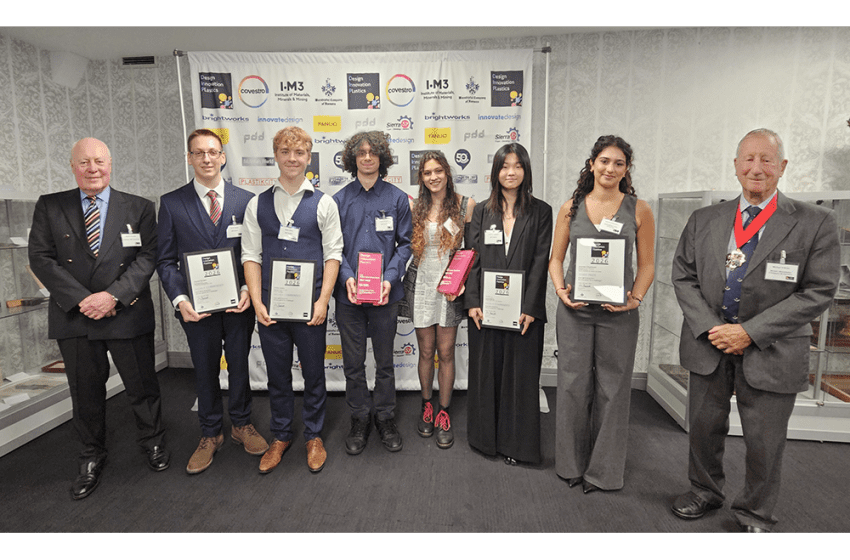
In an unprecedented ‘first’ for the Design Innovation in Plastics (DIP) competition, the judging panel has awarded top prize to joint winners for 2026, reflecting the high quality and very distinct products they created.
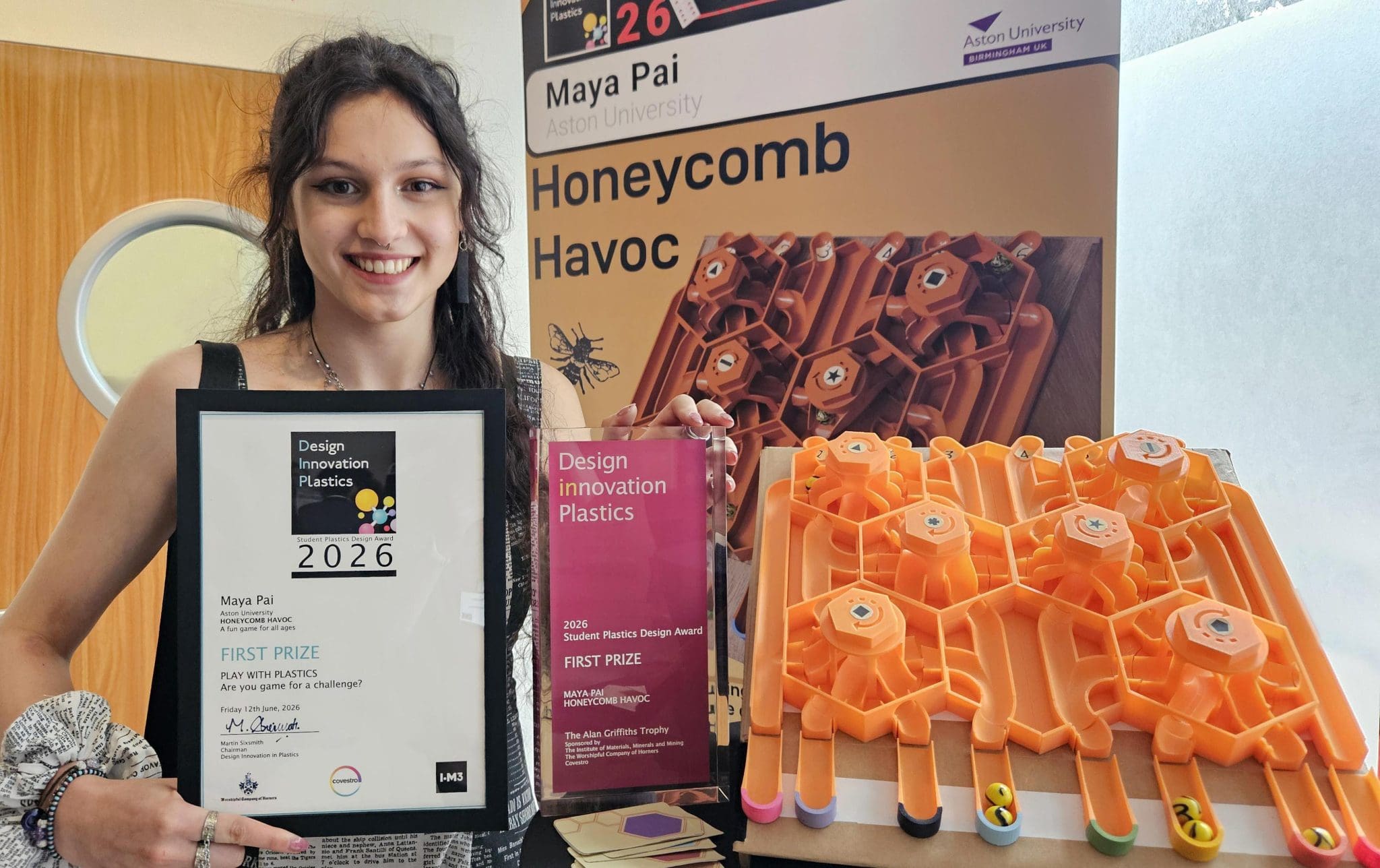
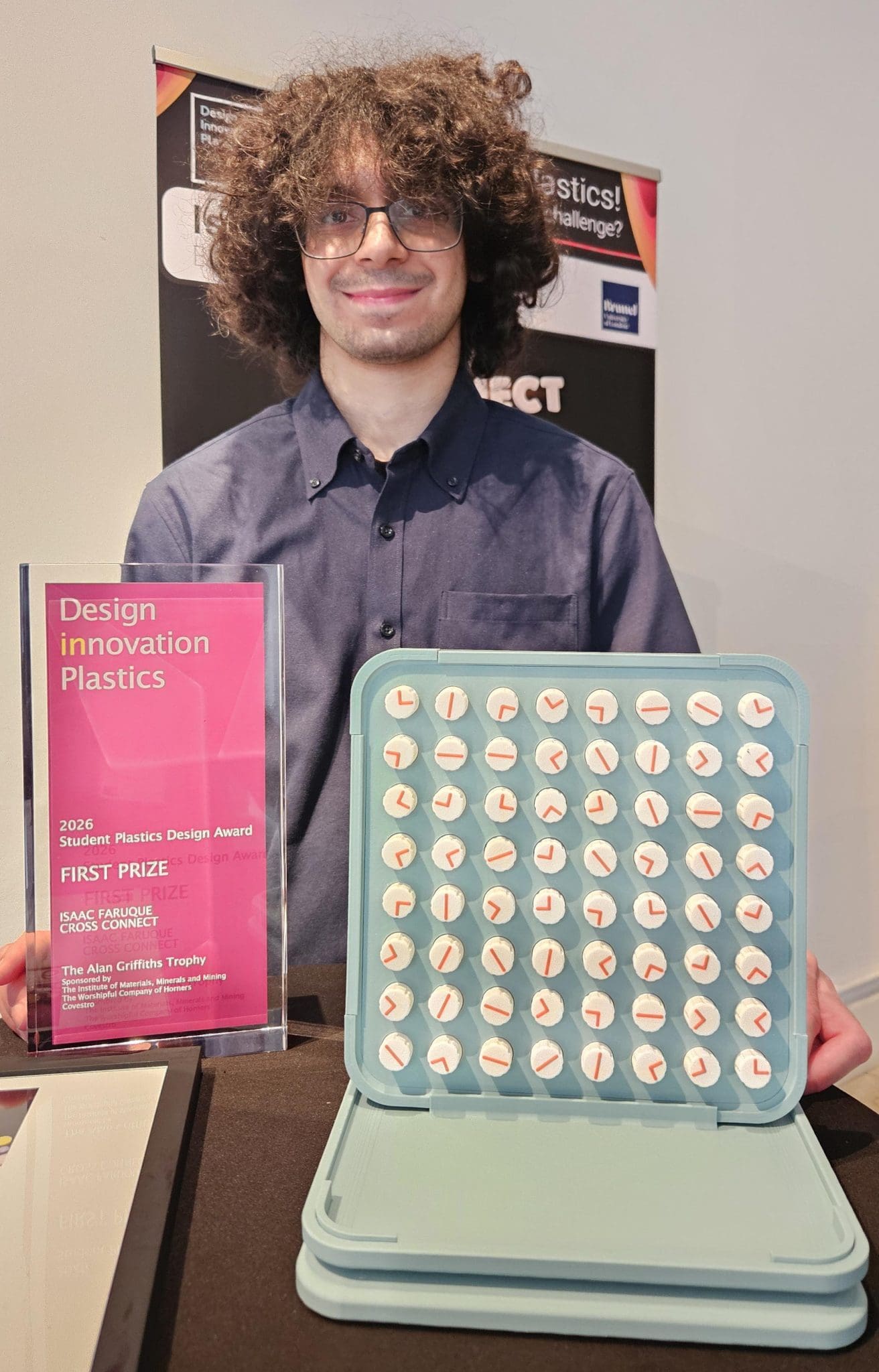
They are Brunel University’s Isaac Faruque with his ‘Cross Connect’ game, and Aston University’s Maya Pai, for her ‘Honeycomb Havoc’ game, both of which offered outstanding solutions to the original brief. Isaac’s entry was recognised for exceptional technical logic and sustainability, while Maya’s design stood out for its market-specific aesthetics and clever design.
This year’s competition asked students to come up with a brand-new game, made primarily from plastics, which can be played indoors or outdoors, be suitable for any specified age range, and be either for learning or activity, or just good old-fashioned fun.
Chairman of Judges, Richard Brown, said: “Our deliberations recognise exceptional quality across all six finalists’ entries, and the two top projects that excelled in distinct aspects of the brief. Above all, what stood out in all entries was their playability.”
Isaac’s game comprised a double-sided grid of dials, with each dial containing a straight or right-angle path. Players rotate the dials with the aim of completing a path between two points on the board. Richard said: “Isaac’s entry had a clear and logical development process; the concept testing was particularly strong and the packaging very cleverly unfolded to form the base of the game. Material selection was clearly justified, and marketing considerations were also addressed effectively. We felt this was a ready-to-launch product with strong user engagement potential.”
Maya’s Honeycomb Havoc game comprises a twisting, spinning honeycomb maze, with dials and marbles. Contestants play cards, and these dictate which dials of the hexagon pieces are turned. This then alters the course of the marbles as they are sent down different pathways to the coloured exits at the bottom.
Richard Brown said, “The development of Honeycomb Havoc was outstanding, resulting in a compact and well-resolved game in which the supporting frame also functions as the packaging. Good market research was clearly evident, with the design tailored to appeal to a wide range of users. The design provided clear visual feedback to players, allowing them to see who is winning at any stage of the game. With only minimal refinements, it could be successfully prepared for market launch.”
Isaac and Maya both go away with a trophy and £1000 in cash as their prize, as well as other benefits such as work placements and an invite to the annual banquet of one of the headline sponsors, the Worshipful Company of Horners. They also receive one year’s membership of the Institute of Materials, Minerals and Mining (IOM3).
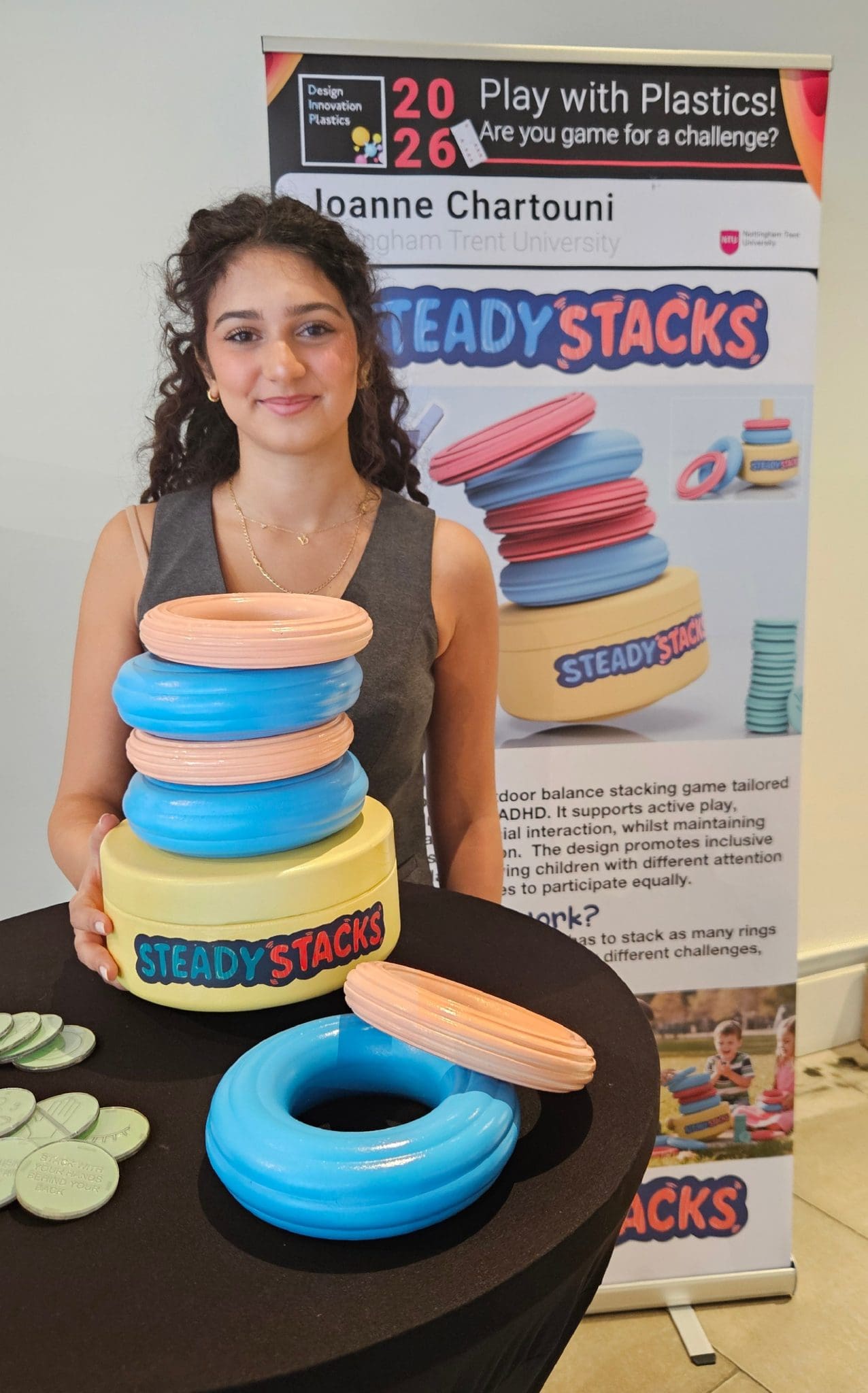
In third place is Nottingham Trent University’s Joanne Chartouni, who developed ‘Steady Stacks’, which challenges users to stack as many rings as possible onto a wobbling base while completing the challenge instructions without knocking the tower over. Joanne tailored her game to appeal to children diagnosed with ADHD, to encourage social interaction and mental stimulation. The judges said Joanne had given well-presented research and made good manufacturing choices, incorporating her insights into the product to result in a game which is both fun and simple to play.
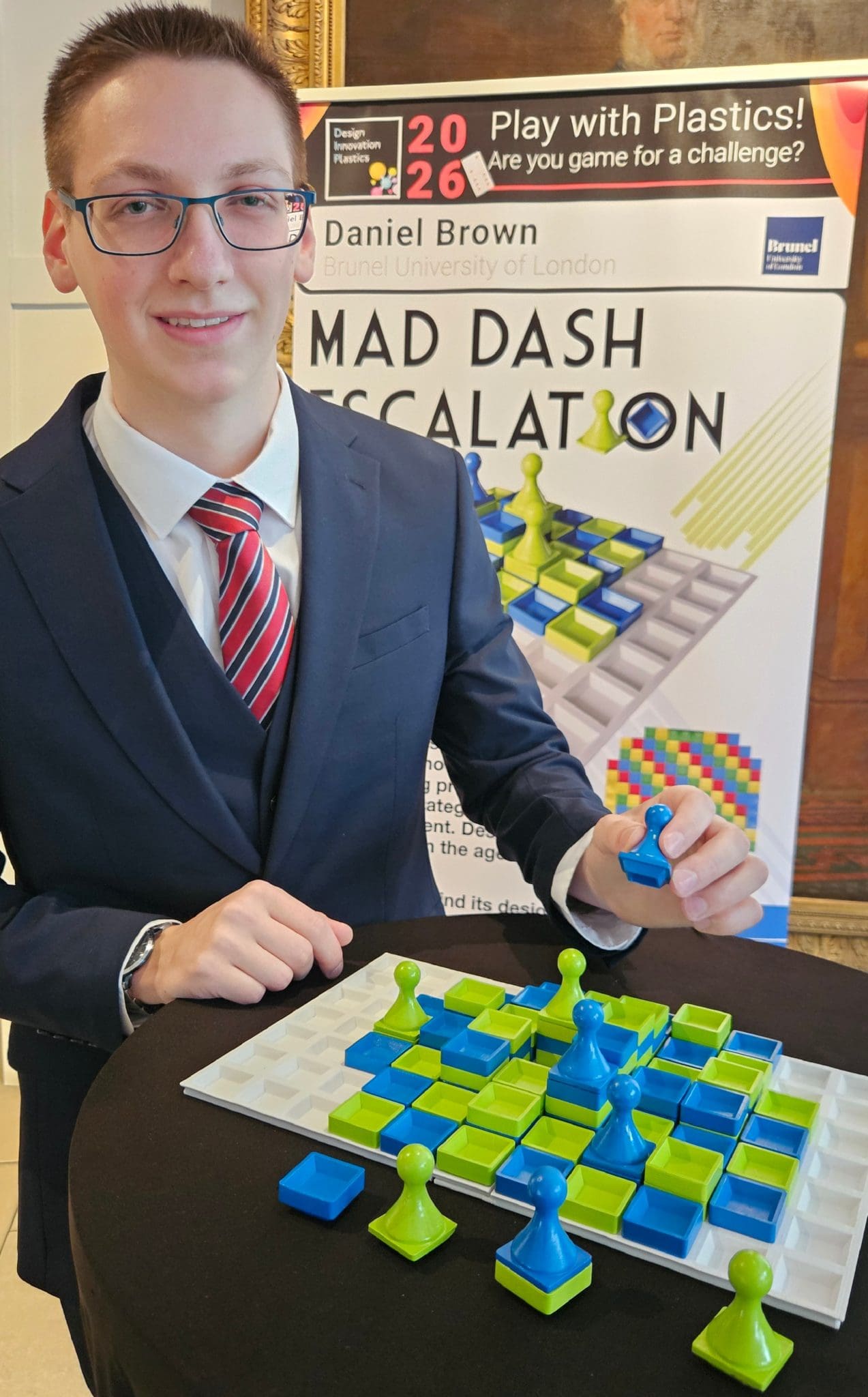
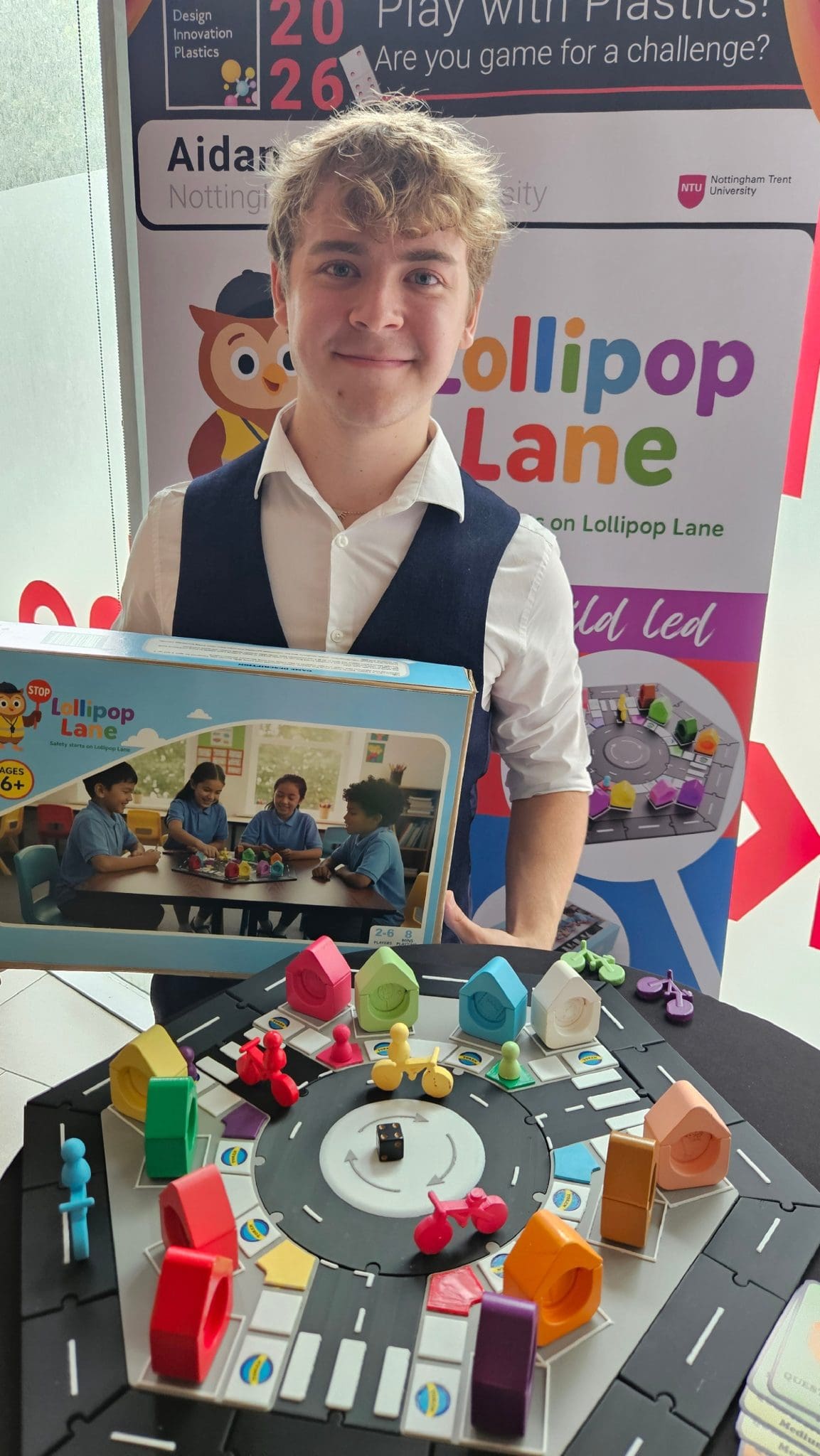
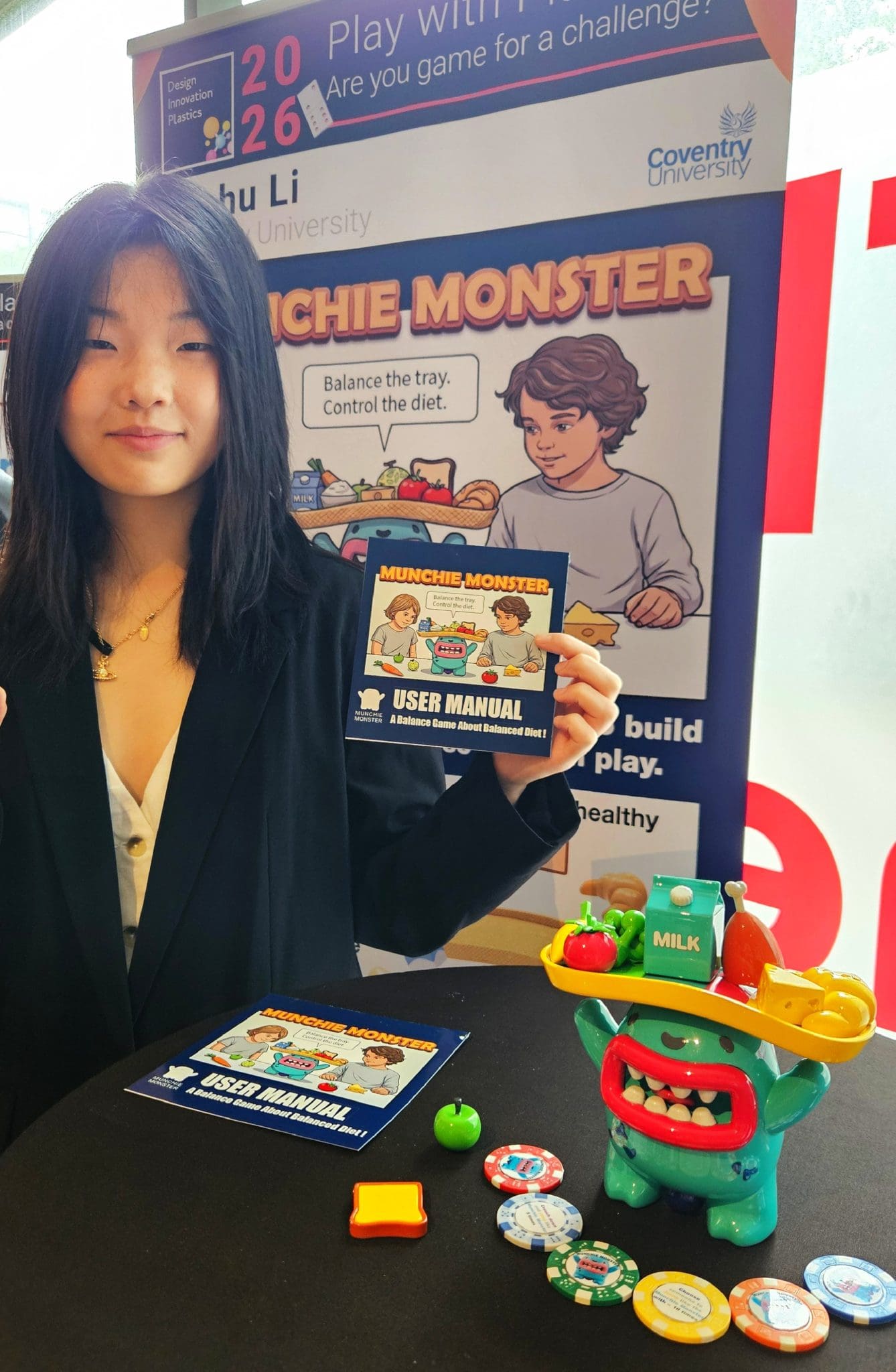
Also earning praise for the research and development of their games were the three highly commended finalists: Daniel Brown (Brunel University of London), with Mad Dash Escalation, a fun, tactical tabletop game involving a checkers board in which tiles and tokens are moved in different ways towards the centre of the board; Aidan Jones (Nottingham Trent University), with Lollipop Lane, an educational game which teaches children road safety rules; and Yushu (Diane) Li (Coventry University), with Munchie Monster, a learning game using balance scales, to teach pre-school children about balanced, healthy diets.
DIP is the longest-running plastics design competition of its kind for university undergraduates in the UK and Ireland. Supported by IOM3 and the Worshipful Company of Horners, it is an industry headline sponsored by Covestro, a global supplier of premium polymers.
As well as cash prizes for all finalists, there are also work placements for the top three students, with leading design and industry sponsors, who include Brightworks, Innovate Design, and PDD.
This year’s final results:
- Equal 1st: Isaac Faruque – Brunel University – Cross Connect, a unique two-player strategy path game featuring a board and grid of dials, made using ABS for the frame and dials, and PP for the clips
- Equal 1st: Maya Pai – Aston University – Honeycomb Havoc, a twisting, spinning honeycomb maze using dials and marbles. PLA was used to make the 3D printed prototype, but ABS intended for larger scale production of the finished article.
- 3rd: Joanne Chartouni – Nottingham Trent University – Steady Stacks, an indoor or outdoor game with a wobbling base. The user must stack as many rings as possible while conducting a challenge. Made with a combination of HDPE for the top and bottom base + medium and big ring, and PP for the tokens.
Highly Commended:
- Daniel Brown – Brunel University – Mad Dash Escalation, a tabletop board game – featuring turn-based, three-dimensional stacking, where every part of the board can be manipulated. The whole game would be made through injection moulding ABS.
- Aidan Jones – Nottingham Trent University – Lollipop Lane, an indoor or outdoor board game simulating a town with roads and shops, which children have to navigate safely. Using ABS for the board parts and HDPE for the mini figures.
- Yushu (Diane) Li – Coventry University – Munchie Monster, a game featuring balance scales, designed for children aged 4-6 to educate them about sugar awareness and a balanced diet. Large-scale production of the product would use a combination of ABS for the body and tray, and PP for the individual food pieces.