Budget 2026: What it Means for UK Plastics and Manufacturing
 Jess Clarke
- 7 minutes read

|
Getting your Trinity Audio player ready...
|
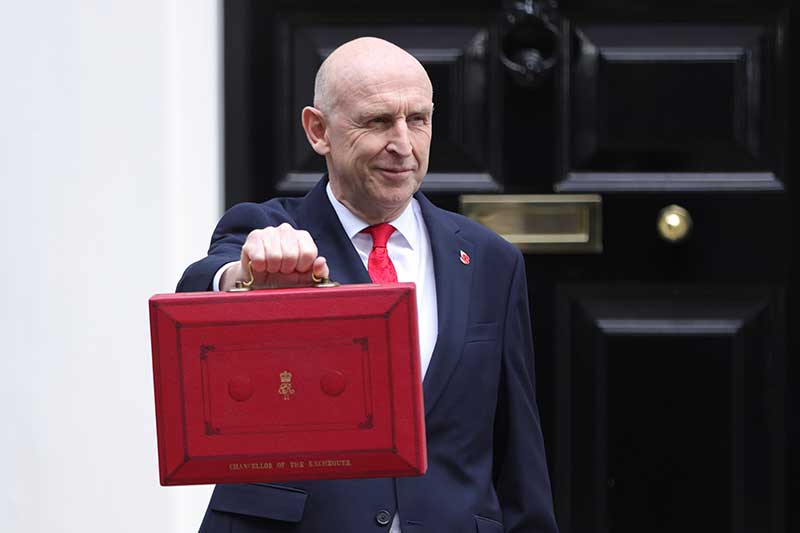
The Budget delivered on 28 October included changes to industrial energy support, investment allowances, employment costs, and plastics packaging requirements. However, the British Plastics Federation (BPF) and Make UK have warned that further action is needed to address the costs restricting manufacturing investment.
For plastics businesses, the announcements include mandatory certification of mechanically recycled plastic used in packaging, extended import tariff suspensions, and changes to tax relief for machinery investment. Several measures will take effect during 2027, while others have longer implementation timetables.
Recycled plastic certification confirmed
The government will introduce mandatory certification for mechanically recycled plastic used in plastic packaging for Plastic Packaging Tax purposes from 1 April 2030, following consultation. This confirms a future requirement affecting how mechanically recycled content is evidenced for the tax. It is not an immediate change, with implementation scheduled more than three years ahead.
The BPF welcomed the announcement, stating:
“At long last, it was good to see mandatory certification of mechanically recycled plastic in packaging confirmed. This is something we have been calling for since the tax was introduced.”
Industrial energy support, but concerns over coverage and timing
Applications have opened for the British Industrial Competitiveness Scheme (BICS). From 1 April 2027, eligible businesses in Great Britain will be exempt from the indirect costs of the Renewables Obligation, Feed-in Tariffs, and Capacity Market schemes.
The Treasury says BICS will support more than 10,000 eligible manufacturers, reducing their electricity bills by up to 25%. An additional payment in 2027 will reflect support businesses would have received had the scheme started sooner. Funding will also be provided to the Northern Ireland Executive for a comparable scheme. The support is subject to eligibility, rather than applying automatically to all manufacturers.
The government also confirmed that the planned Gas Shipper Obligation, which would have added a levy to gas bills in Great Britain, will not proceed. The main Climate Change Levy rates for electricity and liquefied petroleum gas will be frozen at 2027–28 levels from April 2028, while gas and solid fuel rates will rise with RPI inflation. assets.publishing.service.gov.uk
Make UK said most manufacturers would remain outside BICS and argued that the measures did not resolve the sector’s industrial electricity cost disadvantage.
Changes to tax relief for machinery investment
The Budget changes the timing of tax relief for businesses using capital allowances:
- The main-rate first-year allowance will increase from 40% to 50% for qualifying expenditure incurred on or after 1 January 2027.
- The main writing-down allowance will fall from 14% to 12%, effective from 1 April 2027 for Corporation Tax and 6 April 2027 for Income Tax.
The government is maintaining the main Corporation Tax rate at 25% and retaining full expensing.
The effect on machinery purchases will depend on the relief available to each business. Make UK noted that many manufacturers already qualify for full expensing or the Annual Investment Allowance, while the lower writing-down allowance will delay relief for affected expenditure. Make UK
R&D administration and business finance
The government plans to remove the R&D tax credit Claim Notification Form from 1 April 2027 and simplify the Additional Information Form from autumn 2027. These are administrative changes to the claims process, rather than an announced increase in R&D relief rates.
An additional £20.4 billion of capital will be provided to the National Wealth Fund and British Business Bank to support investment and business growth. This is funding for investment and finance activity, rather than a grant allocation available automatically to manufacturers.
The Budget also announced a new Founders’ Relief from 6 April 2027, offering a 10% Capital Gains Tax rate on up to £10 million of lifetime gains for qualifying founders of high-growth, innovative companies. Detailed design is subject to technical consultation, so the announcement should not be interpreted as a general 10% tax rate for all business sales.
Minimum wage increases from April 2027
From 1 April 2027, statutory minimum hourly pay rates will increase by 3.9%:
- National Living Wage: £13.21 per hour.
- Workers aged 18–20: £11.27 per hour.
- Workers aged 16–17 and eligible apprentices: £8.31 per hour.
These increases will affect payroll costs for manufacturers employing staff at the statutory minimum rates.
The government is also allocating £100 million across 2027–28 and 2028–29 to expand apprenticeship brokerage services from seven to 14 Mayoral Strategic Authorities in England. The funding is intended to help employers, particularly SMEs, create apprenticeship opportunities.
Tariff suspensions and export support
Import tariff suspensions covering products across sectors including plastics, chemicals, and automotive will be extended. Suspensions due to expire in December 2026 will continue until 31 December 2028, while those expiring in June 2027 will continue until 31 December 2027.
Businesses will also be able to request additional tariff suspensions during an application window running from 11 November 2026 to 3 February 2027. These measures apply to specified products, rather than removing tariffs across entire sectors.
For exporters, the Budget promises wider eligibility for UK Export Finance working capital guarantees, faster approvals for larger facilities, and a new SME export finance scheme supporting smaller loans from 2027.
Public procurement and business rates
A new definition of a “UK supplier” for public procurement will be published by January 2027. A revised National Procurement Policy Statement will follow in March 2027, prioritising jobs, fair pay, and skills opportunities.
The government has also published new social value guidance for central government procurement. These changes are relevant to manufacturers supplying public contracts directly or through wider supply chains, although they do not guarantee contracts for domestic suppliers.
The headline increase in Small Business Rates Relief thresholds applies to qualifying retail, hospitality, and leisure properties in England. It is not a general extension of relief to manufacturing premises. Separately, the government will abolish Valuation Tribunal fees for non-domestic rating appeals in England for the 2026 rating list and future lists, with fees already paid for 2026-list appeals refundable.
Fuel duty and business mileage
The temporary 5p-per-litre fuel duty cut will be extended to 1 July 2027, with the planned inflation increase also deferred until that date.
For employees and self-employed people using their own cars or vans for business, the temporary 55p-per-mile tax-free rate for the first 10,000 business miles is being made permanent. The rate above 10,000 miles will increase from 25p to 35p from 6 April 2027. These are tax-free mileage rates, rather than a requirement for employers to reimburse staff at those amounts.
BPF calls for recognition of plastics as a foundation industry
The Budget confirms a £350 million Critical Chemicals Resilience Fund and introduces a £120 million Ceramics Industry Support Scheme, both due to launch by the end of 2026.
Responding to the announcements, Philip Law, Director General of the BPF, said:
“Many of our members will see little change in the costs that are holding back investment. Chemicals and ceramics now have dedicated support funds; plastics, the UK’s third largest manufacturing sector by employment, has none. It is imperative that government recognises plastics as a foundation industry.”
While welcoming recycled plastic certification and acknowledging progress on energy, the federation said further action was necessary:
“There was some advance on reducing energy costs, but we need to go further to make real inroads into the extremely high energy bills faced by industrial companies.”
Make UK says fundamental cost pressures remain
Make UK welcomed aspects of the Budget, including the slower minimum wage increase and additional business finance, but said it had not addressed the fundamental barriers to manufacturing investment.
Stephen Phipson CBE, CEO of Make UK, said:
“Likewise, while we welcome the slowing down of increases in the minimum wage, in general employing people remains more expensive and riskier thanks to the Employment Rights Act and higher employer NICs.
“This Budget has failed to address any of the fundamental costs holding back investment and growth in manufacturing.
“We will continue to push the government to make reindustrialisation an economic reality rather than an empty political slogan.”
For full details of the announcements, read the government’s Budget 2026 document on GOV.UK.