Energy Efficiency Made Simple in Plastic Injection Moulding // Millers Oils Blog
 PlastikMedia Guest
- 7 minutes read

|
Getting your Trinity Audio player ready...
|
When energy efficiency and sustainability are mentioned in a factory setting, it’s often dismissed as costly or time-consuming. After all, who has the time to think about energy efficiency, let alone the budget to invest in it?
Let’s address that misconception. Running a factory, especially one with energy-intensive machinery like Plastic Injection Moulding, inevitably means facing substantial energy bills. Unfortunately, honest, switching off a few lights won’t deliver the savings you’re hoping for, but the good news is that meaningful improvements don’t always require major investments. With a few straightforward changes and routine checks Millers Oils can help you cut energy consumption, lower costs, and move closer to your sustainability goals—all without disrupting production.
The Difference Between Energy Efficiency And Sustainability
Energy efficiency is defined as using less energy to deliver the same results, while sustainability is about meeting today’s needs without limiting the ability of future generations to meet theirs. Increasingly, sustainability has become a core target for companies worldwide.
Energy efficiency is often the first step on that journey and enables actions that both staff and management can drive forward. By making practical, low-cost adjustments, businesses can achieve immediate savings and reduce energy consumption. These short-term gains not only cut expenses but also lay the foundation for long-term sustainability goals, helping organisations move steadily toward a more resilient future.
Why consider energy efficiency?
Global economic pressures have had an effect on increased prices of raw materials over the years and energy costs from running Plastic Injection Moulding machines now account for 10–12% of turnover—a figure that exceeds the profit margins of most sites. This marks a 50-60% increase since 2022.
Strategic energy management can cut up to 30% of current energy spend, with payback on investments typically seen within 6–9 months. That means real savings, fast.
Another critical factor is the machinery itself. While upgrading to a hybrid or fully electric Plastic Injection Moulding machine requires upfront investment, these models deliver significant reductions in energy consumption.
Yet, the reality is that approximately 93% of machines in the field today are older hydraulic models—far less efficient and far more costly to run. By tackling energy efficiency head-on, factories can not only reduce costs but also build resilience against volatile energy markets and move closer to long-term sustainability goals.
Energy Management
Understand Your Current Costs
Effective energy management starts with knowing exactly what you’re spending. You can make this process as detailed as you like, but understanding your consumption is the first step. Begin by reviewing your energy bills, speaking with your provider, and comparing any existing energy policies against your information systems, investment levels, and overall motivation to reduce usage. Planning is key, without a clear picture of your current costs, it’s impossible to identify opportunities for savings.
Identify Your Base Load and Variable Load
Breaking down your energy use into base load and variable load helps pinpoint where costs are highest and where improvements are easiest. Base load is the energy consumed even when production is at zero.
For most moulding sites, this accounts for 20–40% of total energy use. Because base load is constant, it’s often the most cost-effective area to target first—small changes here can deliver significant savings.
To calculate this, plot your energy consumption (kWh) against production output (kg) over the past 12 months. The resulting best-fit line will reveal both your base load and variable load, giving you a clear roadmap for efficiency improvements.
5 Simple Ways To Improve Site Efficiency
There are many ways you can look to reduce energy consumption across a factory floor, and it’s worth investigating if there are any government incentives, grants, or tax breaks for energy-efficient upgrades before you decide on a longer term strategy. Here are a few of the easiest and less costly options to consider starting with:
- Power Down Idle Machinery – Idle equipment can account for up to 75% of total energy consumption. One of the quickest wins is simply turning off machinery that isn’t in use. It’s a straightforward step that prevents unnecessary energy waste. If a machine isn’t in use for a long period of time consider an oil drain to minimise the risk of oxidation.
- Install Variable Speed Drives (VSDs) – Electric motors in a Plastic Injection Moulding factory account for approx 60% of the total energy consumption within a factory. If you can slow the motor down by just 20%, it will reduce your energy consumption by 50%! Alternating Current motors (AC motors), are often used in plastic processing and are generally low cost but suffer from operating at a fixed speed. By introducing a variable speed drive, it allows the motor to operate at variable speeds using less energy and cutting costs.
- Insulate Pipework and Tanks – Plastic Injection Moulding machines rely heavily on temperature control, consuming large amounts of energy to heat materials. Poorly insulated pipework and storage tanks allow heat to escape, wasting energy. For large sites, these losses can reach up to 25% of total machine energy input. A simple thermal camera can detect poor insulation enabling a low-cost fix with big returns.
- Detect and Fix Air Leaks – Compressed air leaks, even as small as 3mm can cost around £3,700 per year. Investing in an ultrasonic leak tester (costs around £1000) and carrying out routine inspections can deliver immediate savings and improve overall efficiency.
- Maintain and Upgrade Hydraulic Oil – Hydraulic oil is the lifeline of Plastic Injection Moulding machines. Using the correct viscosity and protective additives reduces friction, wear, and energy consumption. Regular checks and timely oil changes are essential for efficiency.
Is Switching Your Oil Worth It?
Switching your oil to a very high viscosity index, biodegradable or long-life hydraulic oil can significantly improve energy efficiency, extend drain intervals, and reduce costly downtime. While the price difference compared to standard oil is only a few pence, the savings in energy use and maintenance quickly outweigh the cost. Added benefits include protection against rust and degradation, improved machine performance, and higher-quality end products. No more rough edges or excess waste.
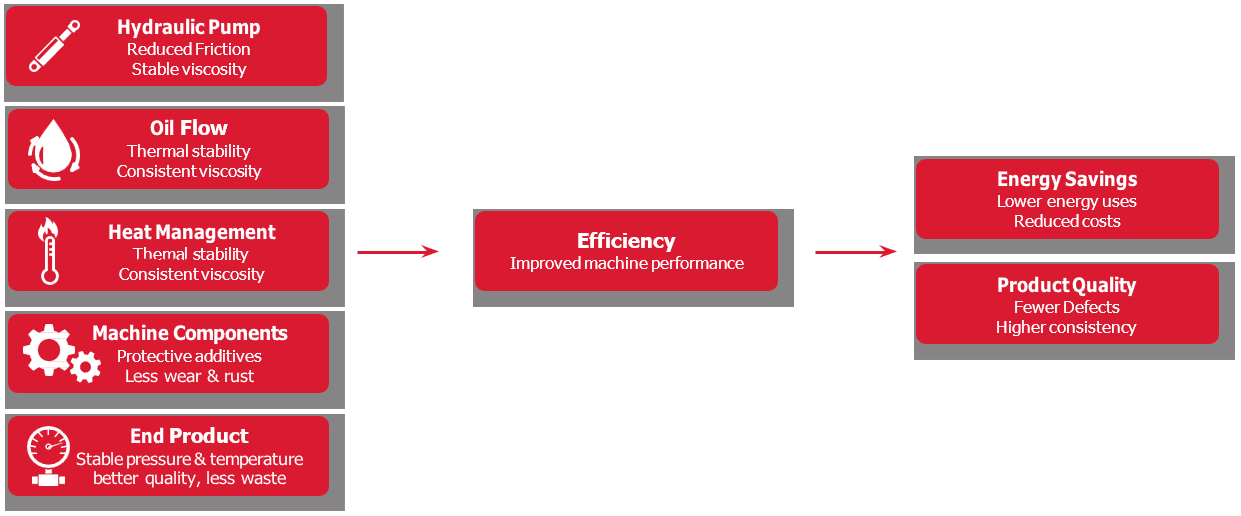
How It Works
- Viscosity Stability
Biodegradable and High Viscosity (HV) oils are engineered to maintain consistent viscosity across a wide temperature range. In moulding processes, temperatures fluctuate constantly. Standard oils thin out when hot and thicken when cold, forcing pumps to work harder. Stable viscosity means the oil flows optimally at all times, reducing resistance and lowering the energy required to keep machines running. - Reduced Friction & Wear
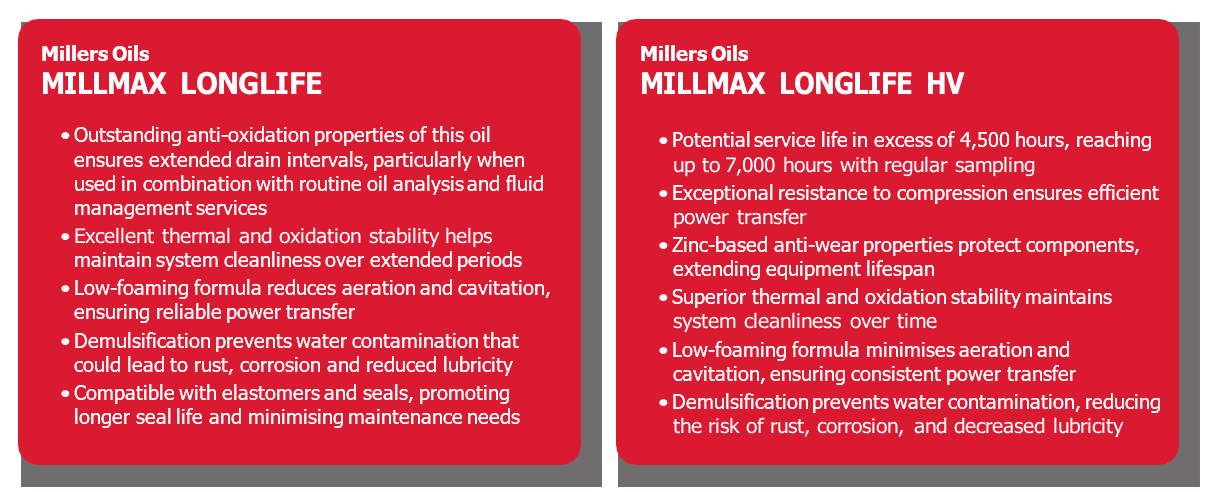
Advanced additive packages in Millmax Longlife oils create a protective film on moving parts which minimises metal-to-metal contact, cutting down on friction losses.Less friction = less wasted energy, smoother operation, and extended component life. - Improved Pump Efficiency
Hydraulic pumps consume a large share of energy in injection moulding machines. With the right oil viscosity, pumps don’t need to overcompensate for thick or degraded oil. This translates into lower energy draw per cycle and more consistent pressure control. - Extended Drain Intervals
Because Millmax Longlife oils resist oxidation and degradation, they last longer before needing replacement. This reduces downtime, maintenance costs, and waste oil disposal. The result is not just energy savings but also operational efficiency and sustainability gains. - Better End Product Quality
Stable oil performance ensures consistent moulding pressure and temperature control which reduces defects like rough edges, warping, or wasted material. Higher-quality output means less scrap, saving both energy and raw materials.
Oil Maintenance
Another simple way to keep your oil in top condition is to utilise specialists that can maintain your oil through oil analysis such as Millers Oils Fluid Management Service. Our trusted experts perform regular testing and provide insights and recommendations on how to keep your oil at its best avoiding potential future issues.
 Energy efficiency isn’t just about saving money—it’s about future-proofing your factory. Start small, measure your progress, and build toward sustainability one step at a time.
Read more news from Millers Oils here.

Millers Oils
+44 (0)1484 713201
Website
Email