ENGEL Showcases High‑Precision Production Solutions at Interplas 2026
 Dan Russell
- 7 minutes read

|
Getting your Trinity Audio player ready...
|
At Interplas 2026, taking place from 2nd to 4th June 2026 in Birmingham, UK, the ENGEL Group presents production solutions for cost-efficient and precise plastics processing. The focus is on applications from the field of technical moulding, all-electric solutions for efficient series production, digital assistance systems for stabilising processes, as well as insights into large machines for the development and implementation of large-format components in the automotive sector with integrated surface finishing directly in the injection moulding process. ENGEL thus shows how unit costs, scrap and energy consumption can be reduced while maintaining high process stability and a fully automated production sequence.
More scope for moulds, automation and cost efficiency
After its world-first presentation at K, ENGEL will show the new tie-bar-less victory electric 220. The electric injection moulding machine is designed for the requirements of fitting production. Its design combines maximum freedom through ENGEL tie-bar-less technology with high energy efficiency and precision. The result is short cycle times, simple and fast set-up processes, and this with a very compact footprint.
Especially in production with large moulds, as used for fittings, the advantages of tie-bar-less technology become particularly clear. The large mould mounting area and the free mould space without tie bars create room for moulds with projecting core pulls, and at the same time expand the scope for automation. In many cases, this enables smaller machine sizes to be realised, which saves investment costs. In addition, the high accessibility of the mould space simplifies set-up and reduces downtime. Together with all-electric drive technology, this creates a production solution that operates precisely, requires little energy and entails low maintenance effort.
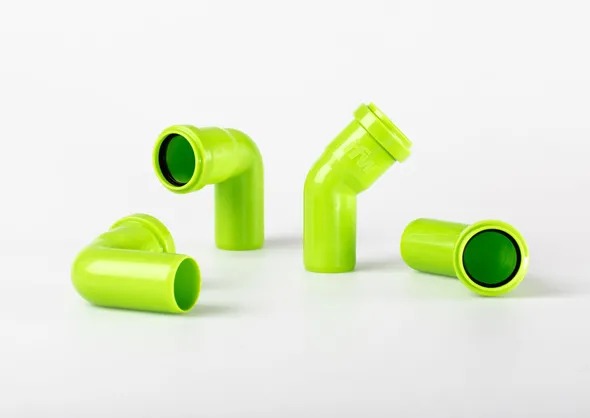
At the trade fair, the machine is integrated into a fully automated production cell that represents the manufacturing process for fittings, including assembly and quality assurance. A family mould from ifw is used, producing four fittings per shot, two with a 90-degree bend angle and two with a 45-degree bend angle. A polypropylene from Borealis is processed with a shot weight of four times 80 grams.
For stable production, ENGEL uses several digital assistance systems. iQ hold control automatically optimises the holding pressure time and can thus increase output. Depending on the application, a reduction in holding pressure time of 15% is not uncommon here. iQ weight control plus compensates for viscosity fluctuations within the same shot and reduces scrap through up to 85% less weight variation. In addition, the iQ process observer detects deviations in 1,000 process parameters at an early stage and provides specific guidance for process control. This significantly relieves personnel and increases OEE. The digital set-up assistant also improves cost efficiency by providing structured support during mould changes and reducing set-up time by up to 80%.
Automation is fully integrated into the production cell. After demoulding, the components are transferred via an integrated Z-conveyor belt to quality control. Two easix articulated robots take over the parts, feed them to an automated ring inserter and thus ensure an automated sequence through to leak testing and discharge of the fully assembled fittings.
In this production solution too, with the new victory electric 220, ENGEL combines precisely the factors that increasingly need to come together in practice: free mould space, high energy efficiency, stable processes and a fully automated sequence. This creates scope in mould design, machine selection and cost efficiency.
All-electric series production for greater precision and cost efficiency
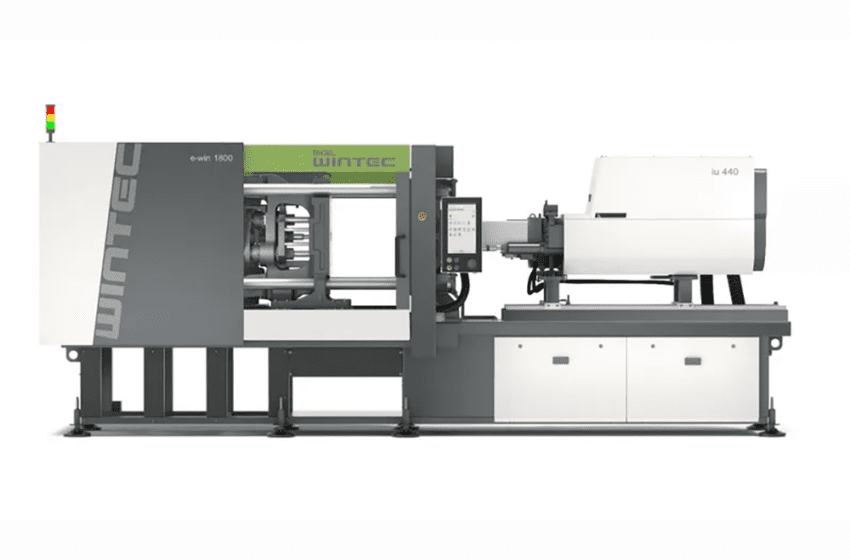
With the new WINTEC e-win, injection moulding processors benefit from high precision, stable processes and low operating costs in series production. The all-electric machine combines proven ENGEL Group technology with a consistently standardised machine concept. This creates a cost-efficient solution for applications in which availability, short delivery times and high reproducibility are the primary focus. Digital assistance systems such as iQ weight control provide additional support in keeping component quality constant, reducing scrap and sustainably lowering unit costs.
At the ENGEL Group exhibition stand, an e-win with 1,800 kN clamping force demonstrates its performance in a compact production cell. Small storage boxes made of polypropylene with a hinge and a shot weight of 33 g are produced here, with a cycle time of under 15 seconds and at the same time high component quality. In this application, iQ clamp control reduced the clamping force by 22%, thereby lowering energy costs.
The all-electric drive technology enables precise and dynamic control of all main movements. This results in high repeatability, reproducible processes and stable shot weights. For processors, this means consistently high component quality, even during long machine running times and within narrow process windows.
The proven interaction of servo motor, ball screw drive and belt drive ensures efficient power transmission and a dynamic response of the clamping unit. At the same time, energy is only consumed when movement actually takes place. Compared to hydraulic machines, this allows energy costs to be significantly reduced. Since no hydraulic oil is required either, maintenance effort and downtime are reduced, while the production environment remains clean.
The WINTEC e-win therefore stands for cost-efficient, precise and low-maintenance series production. For standard-oriented applications, it offers processors a high-performance and future-proof all-electric solution with which productivity, component quality and energy efficiency can be specifically improved.
Increased system availability and lower costs through AI-based assistance systems
With inject AI, ENGEL extends its iQ assistance systems with AI-based functions. In the Expert Corner at the exhibition stand, the company shows how inject 4.0 is thereby gradually being expanded into a data-based and learning production environment. Already today, systems such as iQ weight control, iQ clamp control, iQ flow control, iQ melt control, and iQ motion control automatically intervene in quality- and efficiency-relevant process variables.
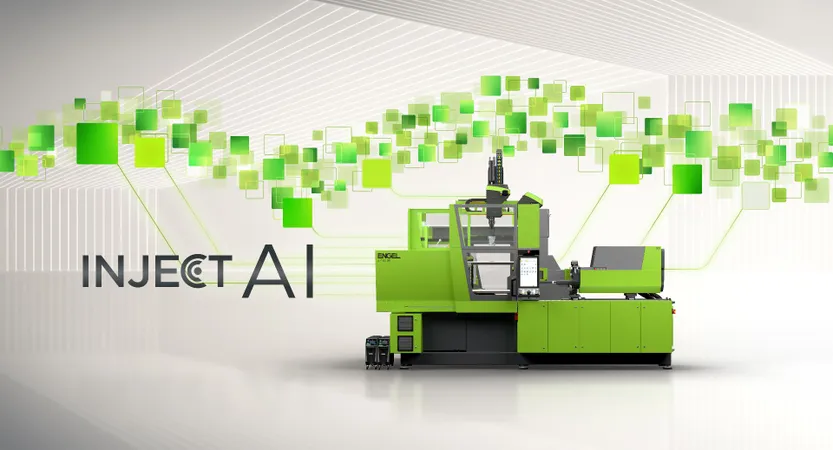
iQ weight control compensates for viscosity fluctuations in real time and keeps component quality stable. iQ clamp control automatically adjusts the clamping force and thus reduces mould stress and energy consumption. iQ flow control stabilises temperature control, iQ melt control monitors plasticising and detects process deviations at an early stage. The iQ process observer provides data-based relief for personnel and helps to avoid scrap at an early stage.
For processors, this means greater process reliability with less effort. Added to this are the ENGEL Virtual Assistant, which makes system-specific knowledge directly available, as well as AI-based applications such as the part finder for the rapid identification of spare parts via photo. This reduces scrap, increases system availability and improves the use of machine and personnel resources.
The duo 5500 combi M: a giant for automotive megatrends and integrated surface finishing
At the exhibition stand, ENGEL uses a digital twin to show the possibilities that the duo 5500 combi M opens up for the development of large-format plastic components. This, probably the world’s largest injection moulding machine in a technical centre, is available for customer trials at ENGEL in St. Valentin. There, components and moulds can be tested in real dimensions and further developed through to mould trials. With 55,000 kN clamping force, 3.5 x 3.5 metre platens, 6.6 metres platen distance, mould weights of up to 150 tonnes and shot weights of up to 42 kilograms, the system creates the prerequisites for applications such as those required above all in the automotive industry and in technical injection moulding.
For processors, the benefit lies in designing large components and validating them early under realistic conditions. This shortens development times, reduces technical risks and creates a robust basis for later series production. Especially where plastics are to replace metal and functions are to be integrated into one component, this expands the scope for component design and cost efficiency.
How such components can be manufactured cost-efficiently with a high-quality surface is shown by ENGEL in this digital version of the duo 5500 using clearmelt as an example. In this process, the injection-moulded component is overmoulded with PUR in the mould. This surface finishing corresponds to coating and is integrated directly into the injection moulding process. For processors, this means fewer separate process steps, an accelerated production chain with improved component quality and high reproducibility.
Visit ENGEL’s Stand in Hall 11 / Stand G50
Read more news about ENGEL here.