PlastikCity on Tour: Opus International Products
 Dan Russell
- 15 minutes read

|
Getting your Trinity Audio player ready...
|
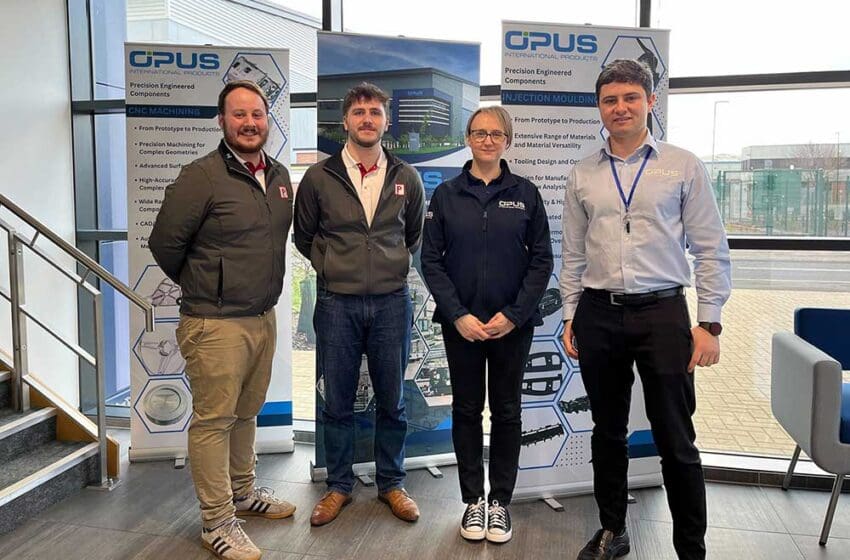
In March 2026, PlastikCity visited Opus International Products in Leamington Spa, where we met with CEO Suzie Siddall and Account Manager William Pereira. The visit provided an opportunity to learn more about the company’s development, its in-house capabilities, and the strategy behind a business that has grown quickly in recent years while continuing to invest in UK manufacturing.
Pictured above, left to right, Will Clarke and Dan Russell from PlastikCity, Suzie Siddall and William Pereira, Opus International Products.
Founded in 2013, Opus International Products has built its reputation as a technically capable manufacturing partner supporting customers from concept through to production. The business now operates from a 40,000 sq ft facility in Leamington Spa, having moved into the site in June 2024, with over 30 on-site employees. While low to medium volume automotive remains its core market, the company also supports customers in aerospace, defence, industrial and medical equipment applications, reflecting a broader capability that goes well beyond traditional moulding supply.
During the tour, it was immediately clear that Opus offers more than straightforward injection moulding and CNC machining services. The business places strong emphasis on engineering development, design support and manufacturability, helping customers refine parts and processes before production begins. That approach came through consistently in both the site visit and the interview. From early CAD support and DFM input through to moulding, machining, inspection and validation, Opus International Products has built a model focused on solving technical challenges and managing projects through the full development cycle, utilising the incredibly strong experience and skills in its engineering team.
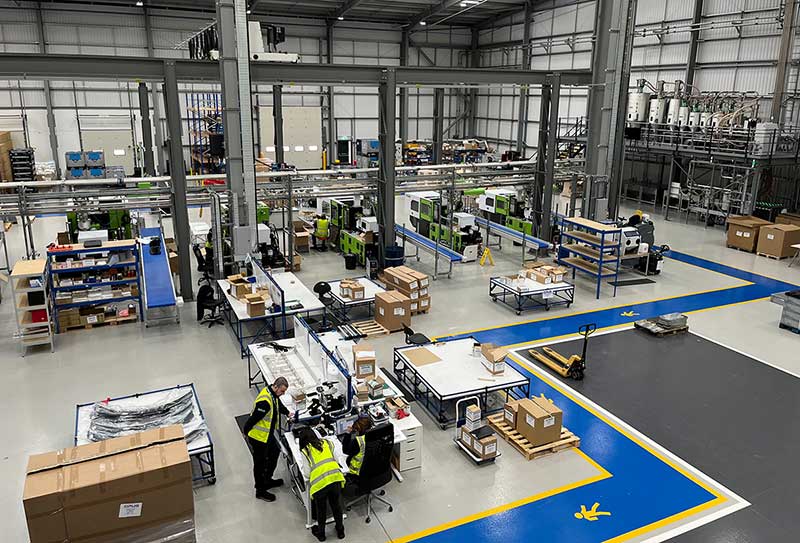
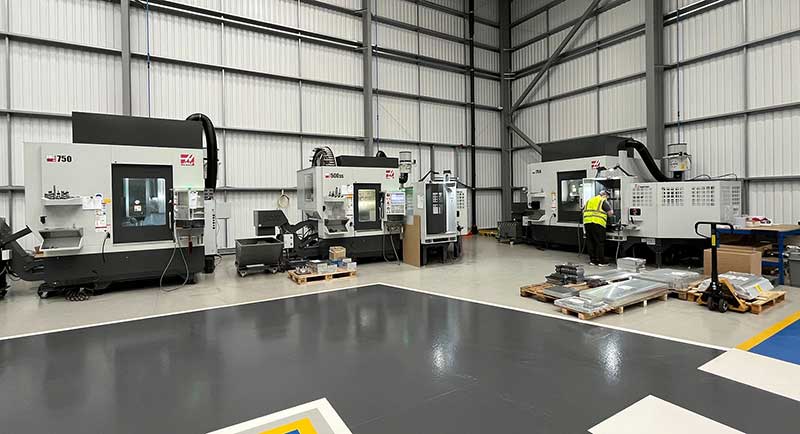
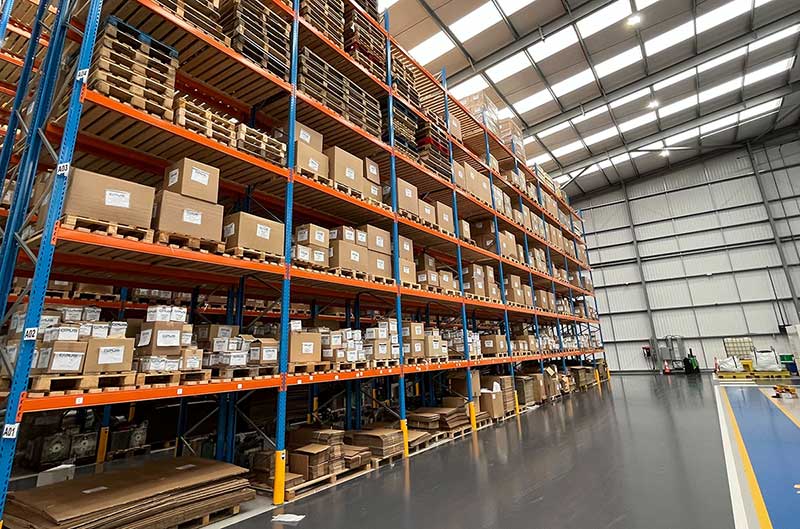
Walking through the site, Will and Dan saw the office space where design teams were working on project development, followed by the quality area, which houses CMMs and other inspection equipment. The visit then moved onto the factory floor, which was notably clean, tidy and well organised, with all moulding machinery arranged alongside associated automation, robotics and conveyors. The CNC machining area housed HAAS 3 axis and 5 axis machines, demonstrating another important side of the business, showing how Opus combines plastics processing with precision metal machining to support more complex outputs; manufacturing in both materials, and combining their strengths into complex assemblies. Normally not a highlight of the tour, even the warehousing and product storage areas were surprisingly impressive, reflecting the exacting standards required for automotive and other demanding sectors that Opus operates in.
A particularly strong impression came from the range of example parts and assemblies on display. These showed the level of technical ability within the business, especially where complex geometries, high-precision tooling and advanced product design techniques were required. Rather than relying on a single process, Opus has developed a broader engineering and manufacturing offering that allows it to support projects at different stages and across different production requirements, from technical mouldings to highly complex, multi-part assemblies in a variety of materials including technical glass-filled polymers and metals.
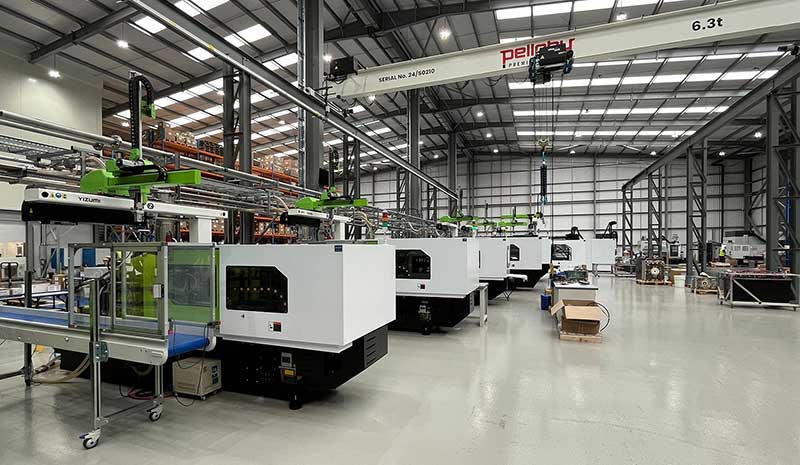
That breadth is central to the company’s proposition. Alongside injection moulding, Opus offers CNC machining, engineering development, product design, CAD support, project management, sub-assembly services, bonding, riveting, inspection and validation. It also supports PPAP requirements and a wide range of testing and measurement activities, with the vast majority of that work carried out on site. For customers in technically demanding sectors, that means fewer handovers, more joined-up communication and a greater level of confidence from prototype through to production supply, from a single supplier.
The company’s growth story is also significant. Suzie explained that when Opus International Products was founded in 2013, the business had not yet developed the in-house UK manufacturing capability it has today. That changed in 2020, when the company brought in its first CNC machines, beginning a period of rapid growth that has since expanded to seven CNC machines and nine injection moulding machines, ranging from 30 to 1200 tonne. This expansion reflects a deliberate commitment to building UK manufacturing capability and shorter supply chains, particularly for customers who value technical collaboration, close project control with clear and consistent communication, and the agility and flexibility that comes from working with a manufacturer based in the UK.
The story of Opus cannot be told without acknowledging founder and previous CEO Rob Coles. During the interview, Suzie spoke about Rob’s importance to the company and his vision for UK manufacturing. She explained that he believed strongly in making parts in the UK for vehicles made in the UK, and that his ambition helped shape the direction of the business. Following his passing at the end of 2024, Suzie stepped into the role of Managing CEO, leading the next stage of the company’s development while continuing to build on the foundations he created.
Opus has continued to invest heavily in that next phase. In 2024, the business invested more than £1 million in machinery and systems, including injection moulding machines and a Piovan material handling system, alongside the wider multi-million-pound investment involved in establishing the new facility. The current focus is on stabilising operations in the new site, supporting continued growth, and diversifying further into sectors where Opus’s engineering-led approach can add particular value. Automotive remains a key and important sector for the business, but the company is also looking at opportunities in areas such as defence and medical equipment housings, where technical input at the design stage is often especially valuable.
That diversification is not about moving away from automotive, which remains the core focus sector for Opus, but about securing future expansion by building on the company’s strengths and applying its technical capabilities across a broader range of sectors. Suzie and William explained that this wider approach is helping position the business for continued growth, while supporting long-term investment in UK manufacturing. Its presence in the UK automotive market remains strong however, with the business recently securing future higher-volume work with a leading luxury UK car brand, with programmes expected to come on stream from late 2027 into 2028. To support that, Opus expects to develop dedicated production cells, further incorporating automation such as robots, conveyors and cobots into its injection moulding fleet.
Another point that stood out throughout the visit was the company culture. Suzie spoke about the value of its young, enthusiastic team, supported by experienced staff with deep sector knowledge, particularly in automotive. William’s own route began in the automotive sector, almost 20 years ago, and he recently moved from technical engineering into a sales role, reflecting that outlook. It allows Opus to engage with potential customers at a technical level from the very first enquiry, using William’s experience to identify ways to simplify tool design, improve manufacturability or reduce unnecessary cost before a project is fully handed over to the engineering team, further adding value for its customers.
This combination of engineering support, technical manufacturing capability and close customer contact is what gives Opus International Products its unique character. It is a business that clearly values long-term relationships over simple transactionary contracts, and that ethos was evident not only in the interview, but across the facility itself.
After the tour, PlastikCity sat down with Suzie and William to discuss the company in more detail.
Interview with Opus International Products
Can you start by giving us some background on Opus International Products?
Suzie: Opus was founded in 2013, and we moved into this new facility in Leamington Spa in June 2024. Before that we were based in Warwick. Historically, the business was built around supplying premium automotive manufacturers, and that is still a really important part of what we do. But the facility we have now allows us to offer much more than that.
William: That is how we started, and it is still a key part of the business, but now we have the capability to support a much wider range of projects and industries as well.
What kind of work is Opus focused on today?
Suzie: We will never stop supplying the low to medium volume premium automotive market. That is still a major part of the business, that’s our bread and butter and something we enjoy doing and our setup excels at. But we are now looking to support aerospace, defence, industrial and medical equipment applications. Areas where the customer may be an expert in their product, but not necessarily in moulding design or tooling considerations. That’s how we can add value in these technical markets.
William: We can support anything from prototype tools up to medium and higher volume production, depending on the component. If it is a small part, volume can mean something very different than if it is a large technical moulding. For us, medium volume can comfortably go into the hundreds of thousands per year depending on the job.
What services do you offer in-house?
Suzie: We offer CNC machining, injection moulding, vacuum casting, sub-assemblies, riveting, bonding, inspection, design services and engineering development. What makes us different is that we are not just here to receive a CAD file and make the part. We can do that, of course, but where we really excel is being involved from the beginning of the process, when a customer comes to us with a challenge and asks how something can be achieved.
William: As soon as we receive an RFQ, we start reviewing the design. We look at opportunities and ways the part could be improved for manufacture. We can suggest changes that make the tool simpler, reduce complexity and lower cost. That early-stage support is a big part of the value we bring, by optimising a project at the earliest stage, it can become more successful for everyone involved.
Would you say that early engineering input is one of your main differentiators?
Suzie: Yes, definitely. We see ourselves as an engineering-led, problem-solving manufacturer. We can do contact manufacturing of parts, but that is not where we stand out. What really sets us apart is the technical support we can provide from the start, all in-house.
We can do full PPAP in-house, we can measure, we can scan, and we can make our own fixtures. We also have multiple manufacturing processes under one roof. So it is a full process, rather than a customer having to move between different suppliers for different stages.
William: Product management is another part of that. There is a lot of coordination involved in making sure projects move smoothly from the first enquiry through to production. This is where we stand out from a typical injection moulding manufacturer.
How much testing and validation can you do on site?
Suzie: The majority of it. There are some tests that we still send out, but most of the testing and validation can be handled here. We have a dedicated quality laboratory, climate controlled and fitted with the latest metrology, CMM and testing equipment. It is really important to us that we can offer the highest level of quality assurance and manage that process in-house.
The Opus quality laboratory is a separate room from the factory floor, with a temperature controlled climate and the latest metrology and measurement equipment, allowing significant on-site testing and validation.
What are your plans over the next 12 months and beyond?
Suzie: In 2024 we spent over £1 million on investments, including the new material handling system, new injection moulding machines, and the wider setup of the building itself. The facility was a multi-million-pound investment overall, and it was funded by the business. So the immediate aim is to stabilise and continue growing in a sustainable way.
When I say sustainable, I do not just mean environmentally. I mean sustainable for the business as a whole. We want continued growth, but in a sensible and managed way. Diversification is also an important part of that.
William: Because we have CNC machining and other manufacturing processes as well, one area can help balance another. That gives us more resilience as a business, which is very important for our stability.
Where do you see the strongest opportunities for that diversification?
William: Aerospace, defence and medical equipment are all strong opportunities for us because our technical support lends itself well to those markets. Customers in those sectors are experts in their own products, but they do not necessarily know how moulding design works, how draft angles should be handled, or how tooling complexity can be reduced. That gives us an opportunity to bring our moulding knowledge into the discussion much earlier and offer more value.
At the same time, automotive remains a very important sector for us. We have also secured future higher-volume work with a luxury UK car brand, which is due to come in from late 2027 into 2028. These projects will take us up another level in terms of production.
What will that mean operationally?
Suzie: It will not mean changing the moulding machines themselves, but it will mean building dedicated production cells with more automation, including robots, conveyors and cobots. We will also be working with Warwick Manufacturing Group on some of that.
You mentioned the company’s UK manufacturing capability has grown significantly in recent years. How did that develop?
Suzie Siddall: When we started in 2013, we did not have the in-house UK manufacturing capability we have today. Rob Coles, our founder and previous CEO, always wanted to build manufacturing here in the UK. He strongly believed it was important that the parts we supply are made here for vehicles that are made here.
It was not until 2020 that we brought in our first CNC machines. We started with three CNC machines in 2020, and now we have seven CNC machines and nine injection moulding machines. So our growth in the last 10 years has been very fast.
William Pereira: We are strong advocates for UK manufacturing, UK skills and shorter supply chains. That matters even more in the current environment.
How have you built the team to support that growth?
Suzie: One of the strengths of the business is the mix we have in the team. Traditionally in moulding or tooling, a lot of the skill sits with older, very experienced people. We do have experienced people in the business, but we have also built a younger team that is enthusiastic, wants to learn, and wants to find better ways of doing things.
We work with a recruitment partner who really understands our philosophy and culture, and that has helped us find people who fit well. We also put a lot into training and progression to continually develop these skills in-house.
William: We are good at giving people training, education and opportunities to develop. That is important. You need experienced people, but you also need to pass that knowledge on and to keep your team happy and hungry to develop.
William, your own background is in technical automotive. Does that help in your role?
William: Yes, definitely. My background has been in automotive since 2007, and I have been in the UK since 2017 working as a product engineer. Even though I now work in sales, that technical background helps a lot. At the first contact stage, I can speak to the customer about the part and the challenge without always needing the engineering team to get involved straight away. Then, once it becomes a live project, the engineers step in and I hand it over properly.
That helps make the early stages more efficient and gives the customer confidence that they are speaking to someone who understands the technical side as well.
Does that technical culture also affect how you handle different sizes of project?
William: Yes. One thing that is worth mentioning is that it does not matter whether a project is small or big, we give it the same attention. Some companies will not treat a small project with the same urgency or care, but for us, every project matters. We will have an engineer working on it, communicating with the customer, managing lead times and making sure things are progressing properly.
Suzie: We focus on the relationship first. That is a big part of how we work.
PlastikCity would like to thank Suzie and William for taking the time to show Will and Dan around the Opus International Products facility and share more about the company’s story, capabilities and future plans.
To find out more about Opus International Products, discuss a project, or get in touch with the team, visit the company website or call 01926 499508.
Look out for the next edition of ‘PlastikCity on Tour‘ to learn more about our excellent UK-based partners.
There are now well over 260 active partners represented on the PlastikCity site, many of which offer highly specialised products or services to our sector.
During our everyday course of business, we’ll be making a point of visiting as many of these partners as we can and using the time to better understand what they offer the market. We’ll then showcase them through this ongoing series of articles. Maybe you can benefit from their services!
Read more about Opus International Products here.
Opus International Products
E-Mail
+44(0) 1926 499 508
Website