Why Natural Materials Belong in Modern Manufacturing // Notpla Blog
 PlastikMedia Guest
- 6 minutes read

|
Getting your Trinity Audio player ready...
|
For more than a decade, the story of materials has been sold as a fight. Plastic against paper. Fossil polymers against bio-based upstarts. One winner, one loser. It makes for a clean headline. In this blog, Notpla explains why these narratives bear almost no resemblance to how the industry actually works.
Spend an afternoon with the moulders, distributors and polymer specialists who turn raw pellets into finished products, and the binary falls apart inside the first conversation. These are not people paid to be romantic about materials. They run injection moulding machines that cost more than houses, and they judge everything that goes into them by one question: does it run?
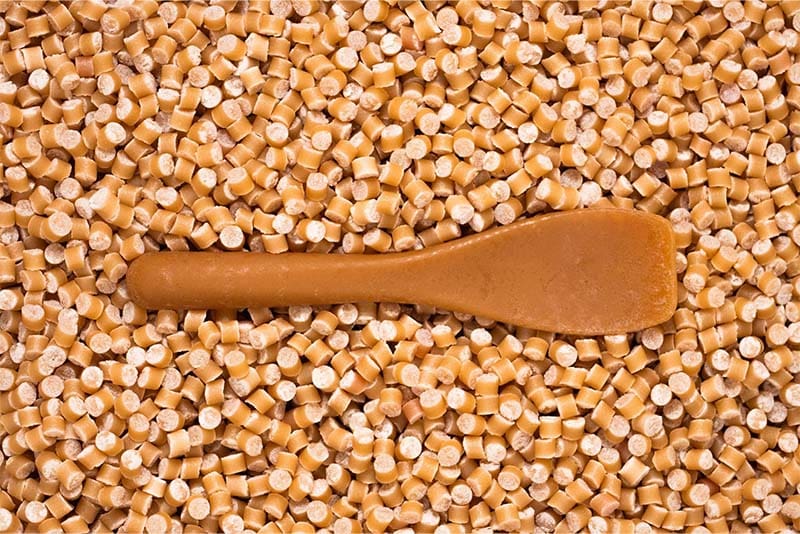
That question has been central to the development of Notpla Rigid, our range of natural polymers designed to bring renewable materials into real-world manufacturing. Working alongside polymer distributors, manufacturers and injection moulders, we’ve spent years testing and refining these materials so they can work within existing manufacturing systems.
Because developing a new material is only the beginning. Getting it to run reliably on the machines already used by industry is where another kind of innovation starts.
A Material That Didn’t Work
The honest place to start is with failure.
When Notpla first brought its seaweed-based polymers to Rob Stringer at Plastic Engineering Solutions, the results were blunt.
“Initial trials were unsuccessful.”
For a moulder, an unsuccessful trial is not an abstraction. It is a stopped line, a scrapped batch, a machine that has to be stripped and cleaned.
What happened next is the part the industry rarely sees. Over several years, through what Stringer calls “perseverance and the dedication of your staff’ the material changed.
“We’ve seen Notpla go from materials we could not mould to blends which now regularly run well in production on standard injection moulding equipment.”
That sentence carries more weight than any sustainability claim. It means the material earned its place on the machine.
Innovation rarely arrives as one breakthrough moment. More often, it comes from hundreds of conversations, shared expertise and incremental improvements that gradually turn promising materials into commercially viable products.
What Manufacturers Actually Need From New Materials
Ask the people on the floor what a new material has to prove, and the environmental pitch is never the answer. It is the opening line, not the argument.
Performance matters.
So does scale.
Bruce McLaren of McLaren Plastics explains:
“Any new material has to prove it can scale, because most products simply can’t function without high volumes and reliable supply.”
Dan Jarvis at Plastribution adds the parts brochures skip: dependable supply chains, technical support and practical manufacturing alongside material innovation.
The lesson running underneath every conversation is that a material is only as good as the system it has to live in.
Daniel Kelk, Business Development Manager at Plastek UK, puts it in the language of the workshop. Because Notpla adapted its material to existing tooling and machinery, converters could utilise current assets without the need for major new investment.
“Notpla have been able to fit their material to existing tooling and machinery to make this conversion easy.”
No new factory. No leap of faith. The seaweed had to fit the machine, not the other way round.
The Honest Problem Nobody Wants to Say Out Loud
Here is the idea that trade-show speeches tend to avoid.
‘We cannot find a direct replacement for plastic that will tick all of the boxes, then disappear the moment you no longer need it.’
It sounds obvious once said.
A material cannot be both indestructible in use and gone on command. Durability and disappearance pull in opposite directions.
The interesting work isn’t chasing a miracle material that does everything. It’s understanding which materials are best suited to which applications.
A takeaway food container and a car component are not the same problem. A dog chew and a computer keyboard are not the same problem.
Plastic remains one of the world’s most important engineering materials. From healthcare and automotive to electronics and infrastructure, its performance has enabled countless innovations and continues to play an essential role across modern manufacturing.
Natural polymers have different strengths.
As Stringer puts it:
“In the right applications they can help with the littering problem… as the materials disappear more quickly.”
Those words, “in the right applications”, capture Notpla’s approach to material innovation.
The goal isn’t to shrink the toolbox. It’s to add a tool.
Why Natural Polymers and Traditional Plastics Can Work Together
The future of materials doesn’t need to be framed as one material replacing another.
As Jarvis explains:
“It is also good to recognise that bio materials can work hand in hand with traditional materials in the plastics manufacturing sector.”
That’s why Notpla works closely with the plastics industry.
Bringing natural polymers into manufacturing requires the knowledge of people who understand polymers, tooling, injection moulding, production systems and supply chains.
Through collaboration with manufacturers, moulders and distributors, new materials can be tested against the realities of commercial manufacturing rather than developed in isolation from them.
Different applications require different materials.
The opportunity isn’t to reduce choice. It’s to expand it.
The Trust Problem
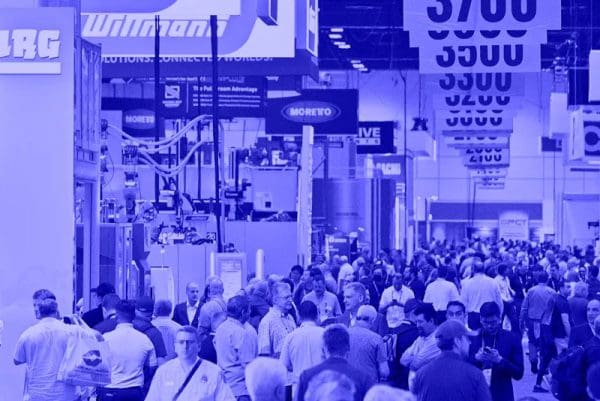
One of the sharpest sessions at this year’s Interplas was not about a material at all. It was about whether anyone believes what manufacturers say.
Dr Robin Kent’s session on greenwashing explored a challenge facing businesses across the materials industry: how to communicate sustainability claims responsibly.
Narrow the claim until you can prove it. Define the boundaries. Build an evidence pack for every statement.
There is a quieter twin to that problem: greenhushing. Companies can become so concerned about being accused of greenwashing that they avoid communicating genuine progress altogether.
The way forward isn’t better adjectives. It’s credible, testable data that manufacturers and brands can stand behind.
Whether discussing recyclability, PFAS, carbon or bio-based content, that’s increasingly what the market expects.
And it’s how conversations around new materials should evolve.
Skin in the Game
So, what happens next?
The experience of our manufacturing partners demonstrates the progress natural polymers can make when material development and manufacturing expertise come together.
Blends that once couldn’t be moulded are now running on standard injection moulding equipment. Materials are being adapted to existing tooling and machinery. Manufacturers are building the knowledge needed to work with a broader range of materials.
But technical progress alone doesn’t create a market.
As Kelk reflected:
“The next step now will be for brands to put skin in the game and commit to these sustainable options.”
The future of materials won’t be won by one substance beating another. It will be shaped by scientists, polymer specialists, manufacturers, distributors and brands working together, and by businesses choosing the right material for the right application.
Read more news about Notpla here.