PlastikCity on Tour: Plastek UK
 Will Clarke
- 17 minutes read
|
Getting your Trinity Audio player ready...
|
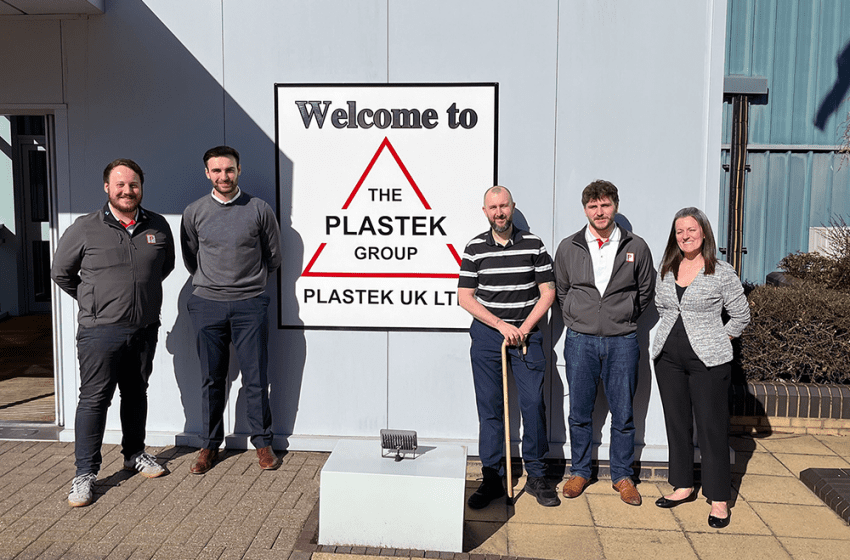
PlastikCity recently visited Plastek UK’s Mansfield facility, where Will and Dan spent time with Danielle, Daniel and Drew to learn more about the plastic packaging manufacturer’s capabilities, investment, technical expertise and plans for future growth.
Plastek UK is part of The Plastek Group, a third-generation, family-owned global plastics packaging manufacturer headquartered in Pennsylvania in the United States. The Plastek Group was founded in 1971, although its origins go back further to 1956, when founder Joseph J. Prischak established the Triangle Tool Company in Erie, Pennsylvania with two partners from his early career in moulding and tooling. The company moved into the plastics moulding field in the 1970s, becoming ‘The Plastek Group’ and earning moulding business in North America from customers such as Kodak, IBM and Polaroid.
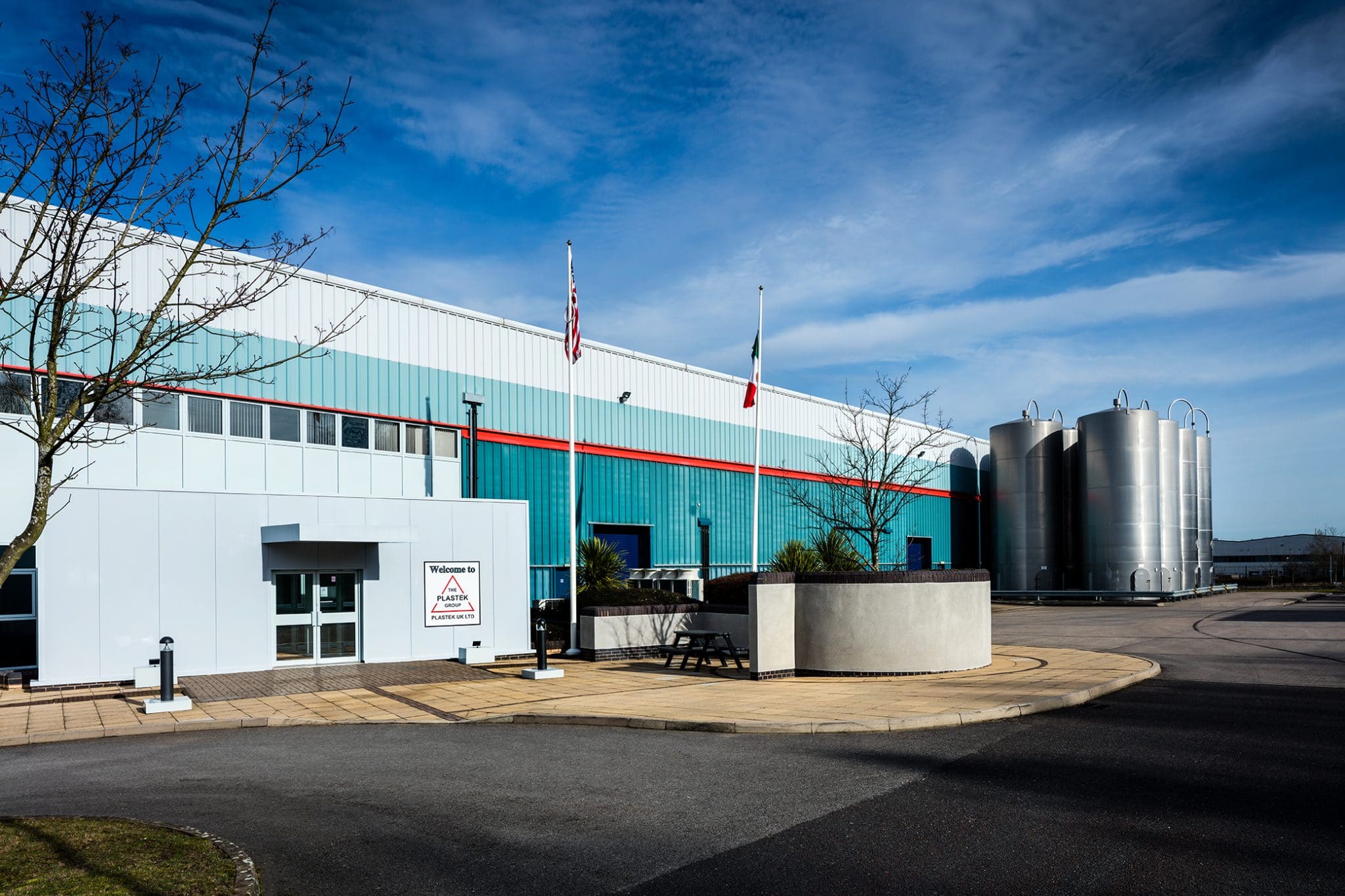
Today, The Plastek Group operates manufacturing sites across the UK, USA, Brazil and Mexico, with more than 2,600 employees worldwide and annual sales of over $350 million. Its UK operation opened in Mansfield, Nottinghamshire in 1999 as the Group’s first international division and has since developed into a substantial, technically capable and multi-award-winning manufacturing site.
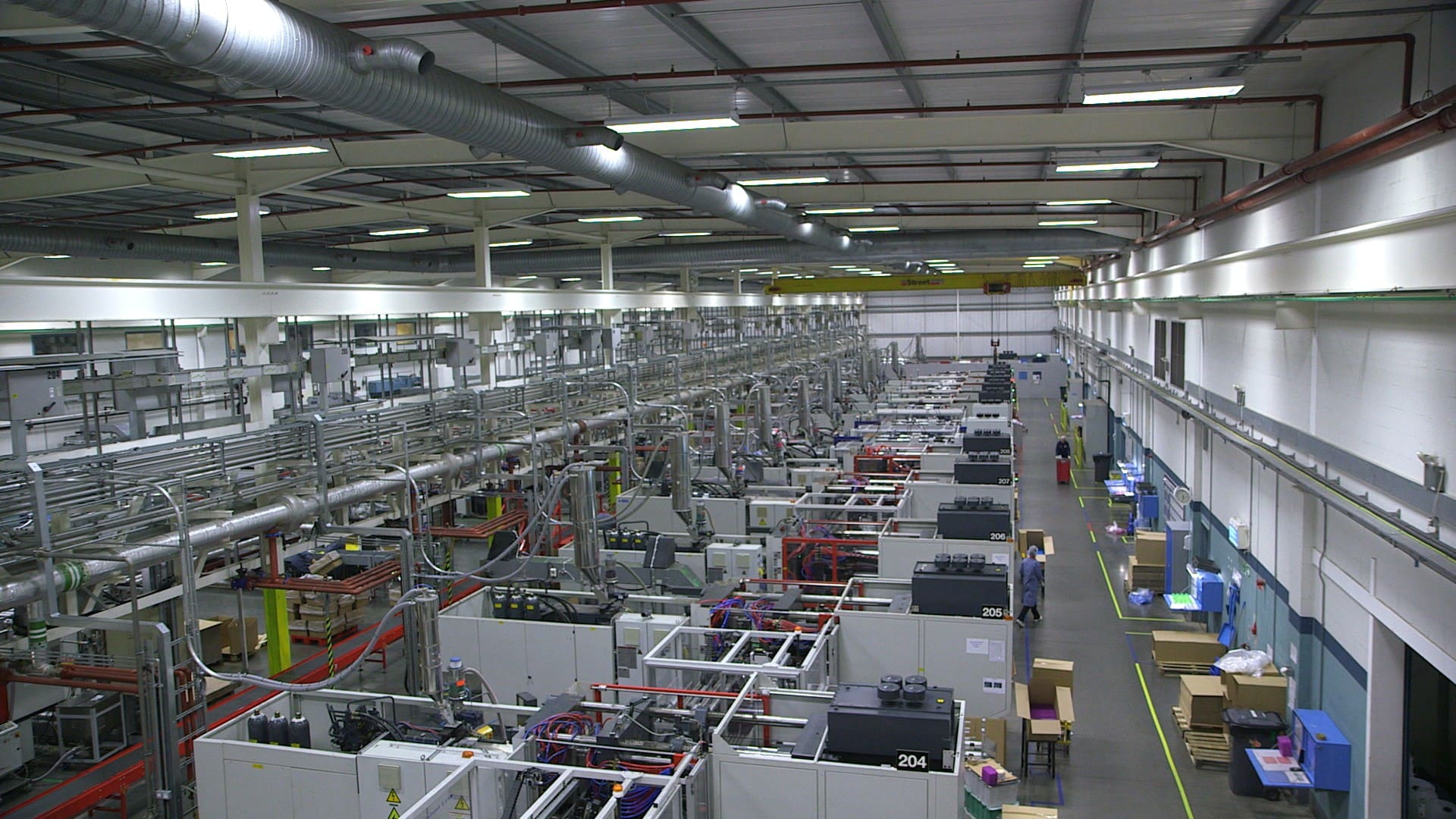
The scale of the UK facility is immediately clear. Plastek UK operates 52 injection moulding machines, ranging from 60 to 650 tonnes of clamping force, supported by a purpose-built, highly organised and automated factory layout designed around flexibility, automation and efficient production flow. Employing 142 staff, the site is climate-controlled, with humidity and moisture control across the factory floor, plus high-care areas with strict access and cleanliness requirements for infant nutrition and medical product applications.
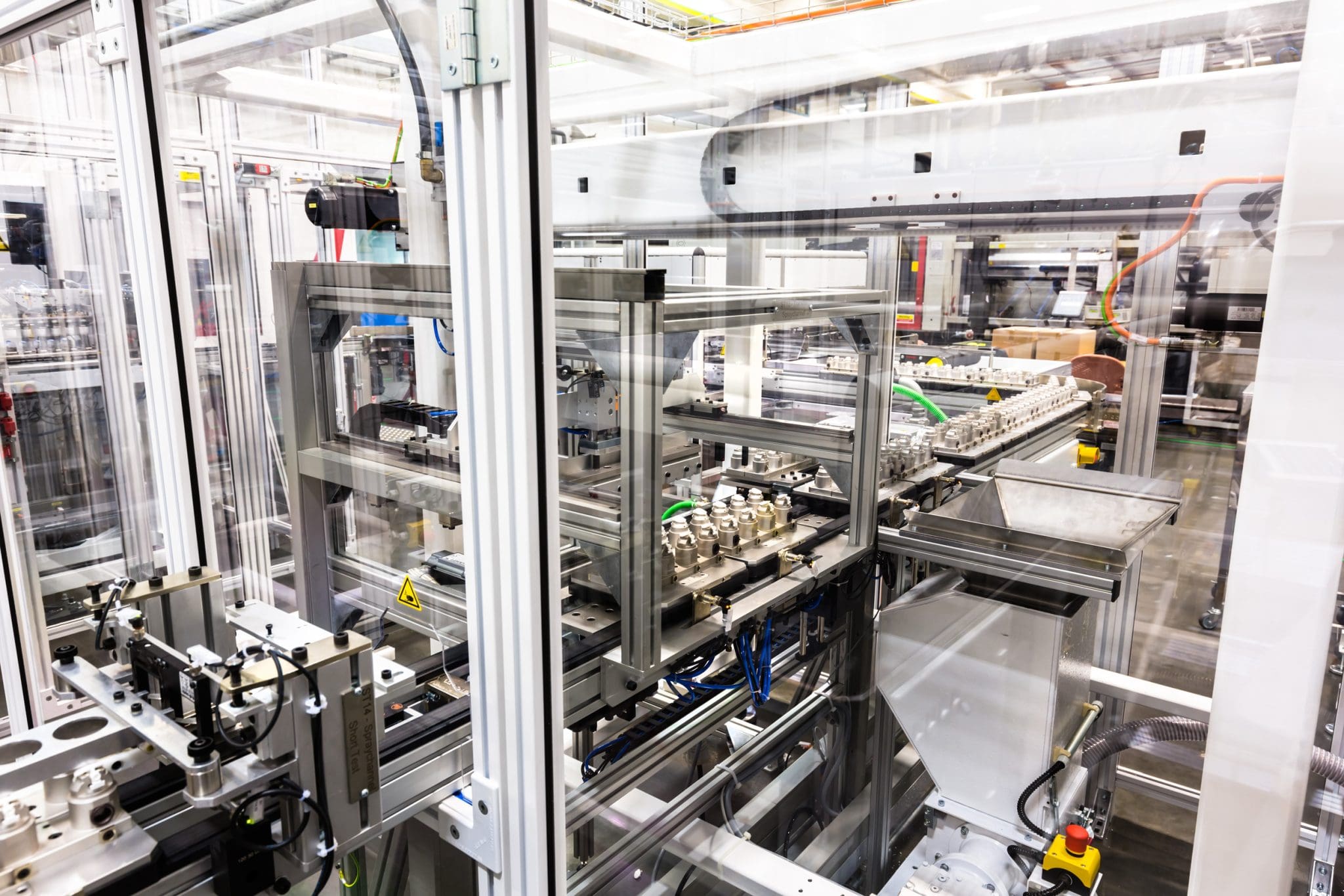
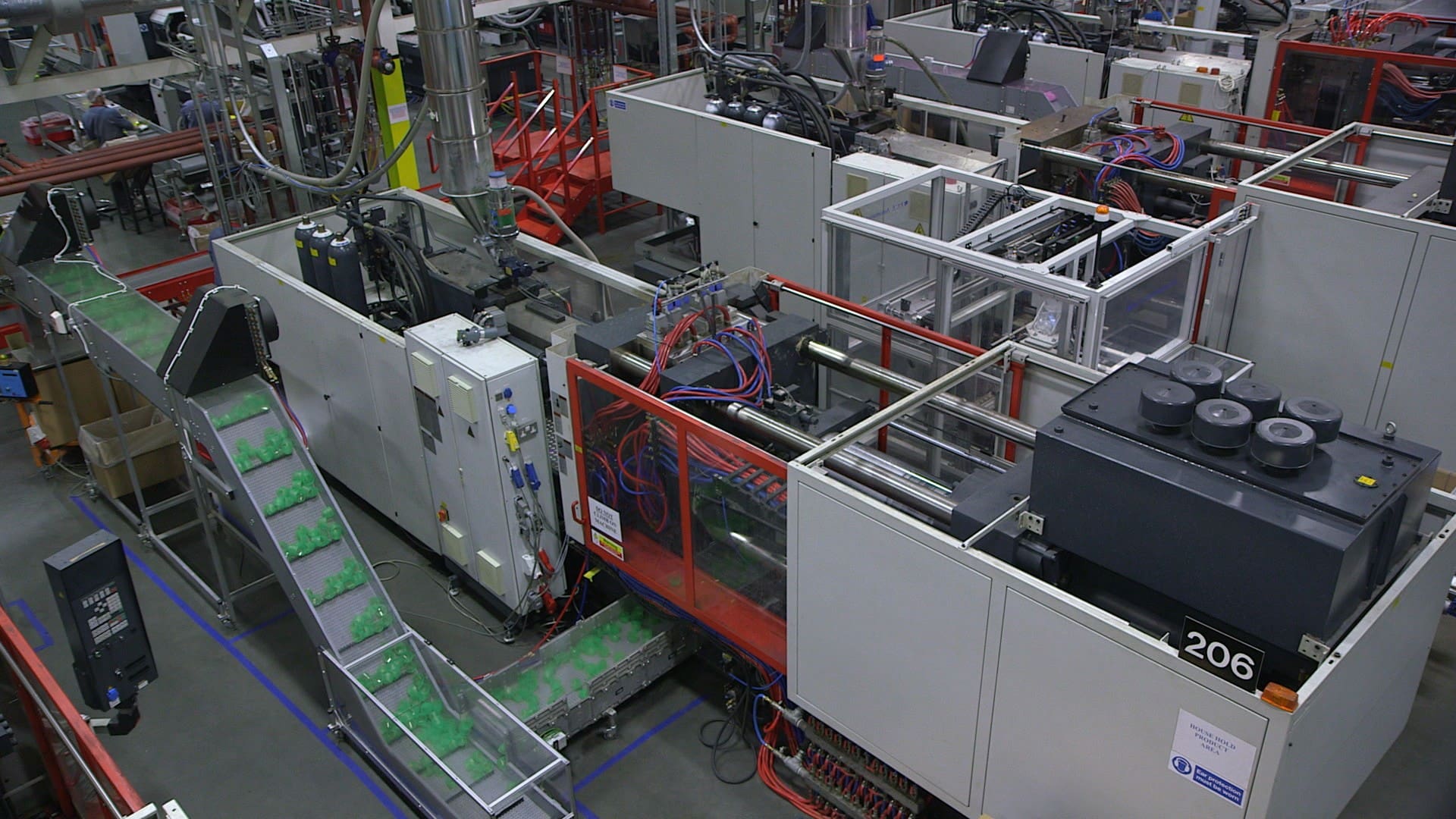
Walking through the factory, the overriding impression is one of efficiency at scale. Large automated production cells were manufacturing very high volumes of technical components, with integrated conveying, robotics, in-line assembly, inspection and automated packing systems supporting continuous 24/7 operation. Parts were automatically moved from one machine to another, using clever automation to orient and prepare parts for further automated processing, a very impressive sight to see.
Some of the mould tools on-site were particularly impressive too, including large cube-style stack moulds with rotating, multi-part mechanisms used for high-cavity, multi-shot products. These are not tools most people in the industry see regularly, and they underline the level of scale and complexity Plastek UK is set up to manage.
The site tour also showed how Plastek UK is evolving. Alongside the highly automated production areas, a new manual assembly section was a busy and important part of the factory. This area has grown as Plastek has diversified into new sectors and project types, including technical plumbing products that require testing, assembly and shelf-ready packaging. The area was full of activity, with operators assembling, testing and packing products that are very different from the high-volume personal care and packaging components the business has traditionally been known for.
Although Plastek UK remains a packaging manufacturer at heart, the business has been actively diversifying since the COVID period. With demand patterns changing across some traditional packaging markets, the company has focused on applying its technical moulding, tooling, assembly, automation and materials knowledge to new sectors such as plumbing, construction, food contact products and more intricate, lower-volume technical moulding applications.
That ability to combine scale with technical problem-solving was a recurring theme throughout the visit. Plastek UK is not set up to run simple moulding contracts. Its team has significant in-house experience across product and process optimisation, specialist mould tools, two-shot moulding, injection blow moulding, clean and white room production, assembly, PCR materials and sustainable material development. The real value that Plastek UK brings its customers is by taking the time to understand and to optimise a project, and to be proactive in suggestions and improvements to its customers which is a focus usually associated with smaller volume manufacturers, rather than with the bigger companies with the capabilities and capacity of Plastek.
This process of technical input became a key theme of the visit, with Daniel, Drew and Danielle detailing examples of customers projects transformed by their input at the planning and design stages of a project.
Following the tour, PlastikCity sat down with the Plastek UK team to discuss the company’s history, capabilities, technical projects, sustainability work and plans for the future.
Q&A with Plastek UK
Q: One of the first things that stands out when walking around the site is the scale. How important is automation to the way Plastek UK operates?
Daniel: Automation is a huge part of the way we work on high-volume projects. The main operation uses relatively little labour because we have automated as much as we realistically can. That includes moulding, conveying, assembly, inspection and packaging.
On some of our largest projects, we are producing tens of millions, and in some cases over 100 million, components per year. At that level, you need robust automation, reliable tooling and very controlled processes.
Some products involve multiple moulded components, twin-shot parts, in-line assembly, camera inspection and automated packing. The aim on these high-volume projects is always to make the process as efficient and repeatable as possible, and these components run 24/7, letting us reach the volumes demanded by the customer.
However, that’s not all we do. In the last few years we’ve taken on smaller projects and some that involve manual hand assembly, which have been really successful and something a bit different to us. We have the capability to do both and the future of the company will be based on low, medium and high volume moulding. It’s the project specification, volumes and economics that decide if automation brings an advantage, but for our high volume work and for some multi component assembly projects, the automation is essential for the best outcome of those projects.
PlastikCity: You are well known for packaging, but the site is now handling a broader range of technical projects. What has driven that diversification?
Daniel: Historically, we were almost entirely focused on packaging, but since COVID, some of those markets changed. Demand dropped in certain areas, including some laundry and deodorant products, because consumer behaviour changed during lockdowns.
Danielle: Lockdowns changed our behaviour a lot more than people realise. We were going out less, washing our clothes less, less need for deodorant and those packaging products which were our main market. Volumes have recovered since, but still not to the level pre 2018.
Daniel: That period made us look at where else our capabilities could be used. We are still a packaging manufacturer at heart, but we have moved into sectors we would not necessarily have considered five or six years ago. Plumbing is a good example, and we are also looking at food contact products, construction and more intricate lower-volume projects.
What has been interesting is that the same core skills still apply. You still need good tooling, robust processes, material knowledge, quality control, assembly expertise and the ability to scale. We are just applying those skills in different markets.
PlastikCity: The plumbing project was one of the most noticeable areas during the tour. What made that project different for Plastek UK?
Daniel: It was a very different type of project for us. We had 27 mould tools arrive and needed to qualify them quickly, with full PPAP approval required across the parts. We are now producing 54 different SKUs, with some of the filter assemblies containing around 40 parts.
The parts are moulded from 30% glass-filled nylon, and we handle the moulding, assembly, testing and packing. Every product is tested for flash, flow and leak before it leaves us, and the products are packed into shelf-ready boxes that go straight onto merchant shelves.
That is quite different from a lot of our traditional work. Some of the volumes are not high enough to justify full automation, so we have built a manual assembly team and are selectively adding automation where it makes sense. It has added a new area to the factory and has given us a different type of production challenge.
Danielle: It was also unusual for us because the products go directly into shelf-ready packaging. A lot of our other work is packed differently, so this project has brought a different kind of operation into the site. It has been successful, and the customer is growing, so we expect that work to continue expanding.
PlastikCity: You also mentioned tool transfer work during the visit. How does Plastek approach projects where a customer needs to move production from another supplier?
Daniel: Tool transfers can be challenging because you are often dealing with an existing issue. It might be that a supplier is not achieving the required performance, or a site has closed, or the customer needs a more reliable process. I think this is where the technical experience we have internally makes a big difference.
One good example was a cap and spout assembly for a very large laundry customer. The customer had issues with the assembly process because the previous supplier was using torque to assemble the parts and fix the cap. Once the production moved from pilot tooling to a high-cavity tool, slight cavity-to-cavity variation caused problems. If the cap was over-torqued, it could fail, and if one dropped on the customer’s line, it could cause significant downtime.
We transferred the tooling and assembly cell to the UK site and reduced scrap from around 30% to under 2%. Then we changed the process. Instead of using torque, we used camera technology and inverter motors to align the cap and spout to a precise position before assembly. That removed the problem completely.
That is where we can add value. We are not just taking a tool and running it. We look at the whole process, identify what is causing the issue and engineer a better solution.
PlastikCity: Sustainability came up several times during the visit, but in a very practical way. How do you approach recycled materials and material reduction?
Daniel: The practical impact is what matters. We work with PCR at very high volumes, so even small changes can make a major difference. My view is that Plastek UK has processed more PCR material than any other manufacturing company in the UK. When you are using recycled content every day, across high-volume products, the impact is much greater than a one-off sustainability project.
On one project alone, we converted around 3,500 metric tonnes of PCR over five years. That removed a significant amount of virgin material from the supply chain.
We also look at lightweighting and material reduction. Sometimes that means changing the tool to physically remove material. In other cases, we use process technology. We have developed a chemical foaming process with a masterbatch partner that can remove around 10% of the material from a product using existing tooling and without investment from the customer.
That means less polymer, less weight, potentially lower transport costs and, where applicable, lower Plastic Packaging Tax exposure because the tax is based on weight. In some cases, we can also improve cycle time. Again, thats something we can support our customers with, and have a lot of experience in managing.
PlastikCity: You have also invested time into testing bio-based and alternative materials. Why is that important?
Daniel: Around five years ago, we started seeing a lot of bio-based materials coming onto the market. The problem was that it was difficult to know what was good, what was viable and what would actually work in production.
So we dedicated one of our 60-tonne machines to material sampling and invested in pilot tools. We have tested a wide range of materials, including seaweed, eggshell, bramble fibre, strawberry fibre, chicken feathers and other alternative materials. You name it, we’ve tried it. We have probably trialled around 100 materials, and the reality is that many are not viable.
That is why we do the testing. We cannot recommend a material to a customer, start a project, spend time and money, then find out it will not work. If we have sampled it, processed it and understand it, we can have a much more informed discussion with the customer.
Danielle: I think that this experimentation is something that other companies our size wouldn’t prioritise. We’re a big company with a huge capacity, but we still find this stuff interesting, and we can pass the knowledge and recommendations on to existing customers, or find a material that we know would be perfect for a new project.
Daniel: That’s the thing, we find it interesting, and we’re able to do it. You know, we’re essentially run by a family of moulding nerds, and we’ve got a factory full of nerds who love doing it. For other companies, they’d be going back and forth sending emails forever, but we find it interesting. Let’s stick it through a mould and see what happens. It all adds to our knowledge.
PlastikCity: The Notpla projects and award-winning work are good examples of that material development work. Can you tell us more about those?
Daniel: We have worked on projects using Notpla material, including a chip fork made from seaweed-based material, which won a gold award at the Penta Awards. You might have seen them if you were at Twickenham for the 6-nations in 2024.
It showed what can be achieved when the right material, tooling knowledge and manufacturing approach come together. We went from a chat in a pub to delivering the forks to Twickenham in 10 days, and the project ended up winning awards. That’s what’s possible with the right partners.
PlastikCity: How do you help customers make better sustainability decisions without compromising the product?
Daniel: It starts with understanding the product and the customer’s requirements. We can look at PCR content, alternative materials, weight reduction, cycle time, product design and future recyclability or reuse.
Danielle: We also now offer product-level carbon data. Instead of relying only on generic industry averages, we use data from material manufacturers and our own production equipment. We have invested in equipment across our machines and plant so we can understand the energy being used and allocate that to the product. That gives the customer a more accurate carbon figure.
Whether the customer uses that data or not is their decision, but we can provide it. It gives them a more informed basis for their own reporting and improvement work.
PlastikCity: What would you say sets Plastek UK apart from other manufacturers?
Daniel: I think it is the combination of value-added capability, technical knowledge and scale. We have experience in PCR, bio-based materials, specialist tooling, different moulding processes, high-volume automation, assembly and tool transfer work.
We also have the footprint and capacity of a large manufacturer, but with the ability to do interesting development work that you might associate more with a smaller company.
That adaptability is important. We can support a project making a few thousand parts, but we can also scale to tens or hundreds of millions of parts if needed.
Danielle: The flexibility is a big part of it. Not every manufacturer wants to take on a small or complex project if they are set up only for very high volumes. We can do the high-volume work, but we are also willing to take on more unusual projects where there is a technical challenge.
Drew: And if a project grows, we have the facility, machinery base and support structure to scale with it.
PlastikCity: What role does the UK team’s experience play in that?
Daniel: It is one of our biggest advantages. We have a long-serving team with a lot of knowledge on-site. I have been here for over 20 years and started as an apprentice at 16, working as an engineer on the shop floor before moving into technical and sales roles.
That kind of experience is across the business. People that understand the machinery, the tooling, the materials and the customer requirements. When a difficult project comes in, you need that depth of knowledge to solve problems quickly.
PlastikCity: What are Plastek UK’s plans for the next 12 months and beyond?
Daniel: 2026 is a busy year for us. We have two new overmoulding projects coming in, including work in a new industry and with a new customer base. We also have new moulding machines coming in for a new project in a new sector.
Diversification will continue to be a big focus. We will continue supporting our core customers and sectors, but we are moving into markets that we would not have considered a few years ago. That includes food contact applications, plumbing, construction and more technical projects with higher-value end products.
Danielle: We expect to see expansion in our headcount because some of these projects require more finishing, assembly and inspection work. We will also continue investing in the machine base and bringing in new technology where it supports the work we are taking on.
PlastikCity: Where can people meet the Plastek UK team over the coming months?
Danielle: We will be visiting several exhibitions this year, including Interplas in Birmingham and Interpack in Dusseldorf. We are also looking at sector-specific events as we continue moving into new markets, including shows linked to plumbing and HVAC.
We are planning to exhibit at Packaging Innovations in 2027 and the Southern Manufacturing Exhibition in Farnborough in 2027.
Drew: Southern Manufacturing was a useful show for us because it has a broad audience. There is a strong engineering and manufacturing presence, and we are seeing more plastics-related companies and opportunities there as well. As we diversify, those types of events become more important.
PlastikCity: Finally, is there a phrase or philosophy that sums up how Plastek UK operates?
Danielle: We use the phrase “Moulding the Future,” and that fits well with how we see the business. We are proud of our packaging background, but we are also moving into new markets, new materials and new technologies.
Daniel: For us, it is about innovation, but in a practical way. We want to help customers make better products, improve their processes, reduce material use, scale production and solve problems. That is where we can add real value.
Final Thoughts
PlastikCity would like to thank Danielle, Daniel and Drew for their time and for showing Will and Dan around Plastek UK’s Mansfield facility.
The visit highlighted a business with impressive scale, deep technical knowledge and a clear focus on practical innovation. From high-volume automated packaging lines and complex stack mould tooling to PCR processing, lightweighting, bio-based material trials and hands-on assembly work, Plastek UK demonstrated a broad range of capabilities under one roof.
The teams passion and thorough understanding of both manufacturing and wider assembly and automation really shone through during the interview, proving that Plastek UK has the skills and experience for handling a wide range of manufacturing projects, in packaging and beyond.
For companies looking to discuss injection moulding, blow moulding, assembly, tool transfer projects, sustainable materials or technical manufacturing support, visit the Plastek UK website: https://www.plastekgroup.com/locations/uk/
Look out for the next edition of ‘PlastikCity on Tour‘ to learn more about our excellent UK-based partners.
There are now well over 260 active partners represented on the PlastikCity site, many of which offer highly specialised products or services to our sector.
During our everyday course of business, we’ll be making a point of visiting as many of these partners as we can and using the time to better understand what they offer the market. We’ll then showcase them through this ongoing series of articles. Maybe you can benefit from their services!
Read more news from The Plastek Group here.
Plastek Group
+44 (0) 1623 662233
Website
Email